Remembering how our Founders Declared their Dependence on God
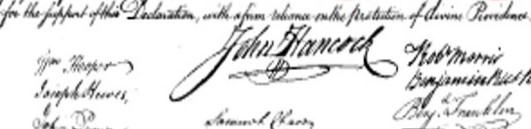
In the summer of 1776, following the outbreak of armed conflict in the colonies, delegates from all 13 American colonies gathered in Philadelphia. They agreed to propose a Declaration of Independence that would become the compact and covenant of a whole new nation. It would clearly reflect their Christian and Biblical worldview. After each delegate signed that document on July 4, Samuel Adams declared what was obvious to them all:
This day we have restored the Sovereign to whom alone all men ought to be obedient. He reigns in Heaven, and from the rising to the setting of the sun, may His kingdom come.
The Words of the Declaration Conveyed a Biblical Foundation.
The most significant additions to Thomas Jefferson’s original draft of the Declaration by Congress were the insertion of phrases that asserted the unapologetic Christian faith of our Founders. In those phrases they appealed “to the Supreme Judge of the World” and they expressed a “firm reliance on the protection of Divine Providence.” This country was truly declaring itself “Under God.”
The Founders stated in the Declaration of Independence that they all held certain self-evident “truths” in common that united them. The truths they listed were as follows:
• “All men are created equal”
• “All men are endowed by their Creator with unalienable rights”
• These include “life, liberty and the pursuit of happiness”
• To “secure rights, governments are instituted”
• Governments derive “their just powers from the consent of the governed”
• When government destroys these rights “it is the right of the people to alter or to abolish it”
• Laws should serve the common or “public good”
• “The right of Representation”
Each of these truths is based on Christian principles that were first enunciated in the Bible.
Today’s blog is excerpted from Mark’s new hardback book.
Get your copy at the button below.
Justice Douglas, in the U.S. Supreme Court case of McGowan v. Maryland, decided in 1961, included this statement in his court opinion:
The institutions of our society are founded on the belief that there is an authority higher than the authority of the State; that there is a moral law which the state is powerless to alter; that the individual possesses rights, conferred by the Creator, which government must respect. The Declaration of Independence….And the body of the Constitution as well as the Bill of Rights enshrined those principles.
The Declaration Set Forth America’s Legal Standard for a Nation.
The founders appealed “to the Supreme Judge of the world” and based America’s legal system upon “the laws of nature and of nature’s God.”
According to the foremost legal scholar recognized in America at the time, Sir William Blackstone, in his Commentaries on the Laws of England, the phrase, “the laws of nature and of nature’s God” contained two components: (1) “Of nature’s God” referred to the revealed law of Scripture itself, while (2) “the laws of nature” referred to the law of God written on the heart of man which must be consistent with Scripture. Blackstone noted that all law must be based upon those two components: God’s law written on man’s heart as best that man understands that law, and the revealed law as found in the Scriptures.
Since all true legitimate law is based on God’s laws, no human laws can be valid if they contradict this higher law. Sir William Blackstone was emphatic about this point of legal supremacy of God’s laws over man-made law:
Nay, if any human law should allow or enjoin us to commit it, we are bound to transgress that human law, or else we must offend both the natural and the divine.
There are four Biblical principles of law that were derived from the phrase, “the laws of nature and of nature’s God” that also formed the basis for America’s legal system set forth in the Declaration of Independence:
• God is the ultimate source of law;
• God’s law is universal and unchanging;
• Only laws and judicial decisions consistent with God’s laws are legitimate; and
• Any law contrary to God’s law is considered void or invalid.
This idea of the law of nature, written upon our hearts, is consistent with Scripture. In the book of Romans, chapter 1, verses 19-20, it says that His laws have been made known to each of His creations. It was not only held by most Americans at the time, it was specifically held by most of the Founding Fathers at the time. Notice the words of one of the signers of our Constitution, Rufus King:
The . . . law established by the Creator, which has existed from the beginning, extends over the whole globe, is everywhere and at all times binding upon mankind. [This] is the law of God by which he makes his way known to man and is paramount to all human control.
James Wilson, another signer of our Constitution, and later a U.S. Supreme Court Justice, emphatically stated that “God . . . is the promulgator as well as the author of natural law.”
Thus, when Jefferson and the other Founding Fathers cited to the “laws of nature and of nature’s God” in the Declaration of Independence, they were creating a legal heritage for America based upon the Bible! That heritage was consistent with the principles upon which America was founded and the beliefs of its citizens.
The Declaration Based American’s Rights on God.
One of the greatest contributions to liberty set forth in the Declaration of Independence is its reference to the concept of rights that were “inalienable.” Because their source was God and they were not provided or created by any government, these inalienable rights could never be taken away legally and justly by any government. The Declaration’s reference to “inalienable” rights was unique to the world and critical to the true value of liberty.
The rights of Americans are given to us by God through the “laws of nature and nature’s God.” Thus, what God gives, man cannot take away at any time, in any place, or under any conditions other than those which God determines. By using the term “inalienable” to describe our rights, the Founders were emphasizing that the Bible would be the basis for what rights were held by the citizens of America. Moreover, the obvious implication is that rights that God gives can only be defined consistent with God’s standards. Hence, our legal system as enunciated by the phrase, “the laws of nature and nature’s God,” and our rights that were described as “inalienable” recognized that our rights had to be interpreted and defined consistently with Scripture, where they were set forth.
This idea that our rights do not derive from the Constitution or from government, but were already existing and God-given, is novel to the modern mind, but it was not novel to the Founders or the legal scholars of that time. One of the signers of the Constitution, John Dickinson, clearly stated this belief as follows:
[T]he rights essential to happiness……… We claim them from a higher source from the King of kings and Lord of all the earth.
Samuel Adams echoed this idea when he expressed that:
[T]he only true basis of all government [is] the laws of God and nature. For government is an ordinance of Heaven, designed by the all-benevolent Creator.
There are numerous other quotations of the Founders that have a similar sentiment to those noted above. The ideas expressed by John Dickinson and Samuel Adams were not radical for their day, but rather were quite mainstream.
By so interpreting our rights, our Founders anchored them to an unchanging standard that was predictable, knowable, and understood by all.
The development of Biblical ideas of civil liberty over thousands of years had finally culminated, by the establishment of America, in the world’s first Christian republic.
For extra content and to help support my work, subscribe now.