Biblical verses pagan views on heavenly signs
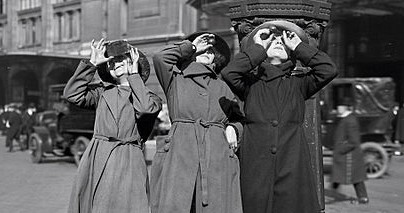
This past week in North America a rare solar eclipse was observed. Live coverage on major and minor networks distinguished this year’s phenomena. People traveled far and wide to see the full eclipse. News commentators were crying and interviewing people as to how it impacted their life. I saw the eclipse of course, as did many Christians, but likely with a different mindset.
The Bible speaks of signs in the heavens, particularly through occurrences with the sun and moon and stars. Often there is hysteria and speculation of eschatological predictions that it may indicate. Some talked about alignment of planets and such.
Of course, we have to realize that if you are a Christian in the southern hemisphere (which is the majority of believers today) you did not see any of these things and so the question arises if it is really applicable at all.
But there is a clear biblical historical understanding of astronomical events that we will discuss in today’s post. Most scripture references to these heavenly signs are to be understood figuratively or symbolically. This is how the Old Testament prophets used such language. For example in Isaiah 13 this language is used to speak of the fall of the Babylonian Empire which took place over 500 years before Christ. It had nothing to do with the end of the world.
Similar language in the Gospels likewise did not automatically mean that it is describing the end of history when Jesus returns. Some things Jesus predicted were certainly fulfilled with the destruction of Jerusalem and the Temple in AD70. The imagery and language of the Book of Revelation is full of language commonly used in the Old Testament. Modern prophecy experts have their detailed explanations, but how was it understood by many believers in the first century?
It often was symbolic of major national upheaval and shifts of global power in the nations. Perhaps this week’s eclipse could indicate that some political changes are about to occur or already happening. But first, a couple Scripture references to consider:
Mark 13:24-26; “the sun will be darkened, and the moon will not give its light, and the stars will be falling from heaven, and the powers in the heavens will be shaken…”
Joel 2:31; “The sun shall be turned into darkness and the moon into blood before the great and awesome day of the Lord.”
Pagan Views
Some ancient pagan religions identified or connected their gods with the heavenly bodies or with climate events and harvests and fertility and other natural phenomena.. Their hysteria would be much worse than just a crying tv celebrity. It might cause a mass murder through human sacrifice of many people in order to appease their gods, or save their sun from being consumed, etc. The God of the Bible was not hesitant to use the pagan religious beliefs to influence them for His purposes, such as when the Exodus story humbled most of the key Egyptian gods. The sun was darkened for days over Egypt and prepared for the Exodus of God’s people from bondage.
Modern “climate change” reports are really just modern day hysteria by modern pagans who fear the power of nature the same as ancient peoples. Their propaganda occurs almost every day when there is a heat wave or a cold wave or a flood or a hurricane, or almost anything. And the belief is that we humans have power to appease (the gods of) nature. Of course, it is not stated that way anymore. Now they say if we just stop using fossil fuels or gas stoves or countless other things to achieve “environmental justice” then the planet will be saved.
(Of course, the under-developed nations hate the climate policies of the global elites because it largely prevents them from achieving economic prosperity. Their tyrannical government officials agree to it because it is free money for their disposal from the global agencies, but it only helps corrupt politicians – not the average person).
Legitimate Care for Creation
Despite the idolatry of nature and hysteria, it is legitimate for believers to care for creation as good stewards. We can be environmentally conscious and be committed to conservation as long as we do not violate the clearly stated hierarchy of values God puts on human life, private property, and individual liberty. But let’s face it, the writings of the the Apostles, the early Church Fathers, the theologians and Biblical thinkers and writers of the middle ages, the Protestant Reformers and Evangelicals up until the last 50 years simply did NOT write much about the environment.
The greatest Christians in history wrote only occasionally on the care of the earth, but it was never even close to treatment of the other Biblical values. It it not because we modern believes are more enlightened. It is because a Biblical worldview holds that the environment is of lesser value than other transcendent rights and concepts of true justice. Modern Christians who have put the climate agenda high in their goals have largely been walking “in the counsel of the ungodly” (Psa 1:1), as ancient paganism and its values have become dominant again in modern times.
But back to signs in the heavens. God will sometimes use events of nature to communicate to people, especially unbelievers. This kind of communication is of less value for God’s people who have the Scriptures and the Holy Spirit. It is important to study Scripture extensively in order to develop an understanding of certain words and phrases as Jesus and God’s prophets and apostles have understood them throughout history. And with that solid Biblical worldview we can then ponder current events in politics and in nature and perhaps have some sense of His workings in the present and future. If the eclipse this week sparks such study, it is good.
[For paid subscribers I have added part of an old American sermon from over 200 years ago regarding a solar eclipse at that time. See below.]
The content below was originally paywalled.
A SERMON CONTAINING REFLECTIONS ON THE SOLAR ECLIPSE
WHICH APPEARED ON JUNE 16, 1806
By Joseph Lathrop, D. D., Pastor of the first Church in West-Springfield
AMOS 8:9
It shall come to pass in that day; saith the Lord, that I will cause the sun to go down at noon, and I will darken the earth in the clear day.
Amos was bred an husbandman and a shepherd. From his rural employment he was called to the office of a prophet. He says, “I was not a prophet, nor the son of a prophet; but I was an herdman and a gatherer of sycamore fruit. And the Lord took me, as I followed the flock, and said unto me, go, prophesy unto my people Israel.”
Many expressions in his book are taken from observations, which a shepherd would naturally make in attending to the business of his calling. In Judea the shepherds watched their flocks, not by day only, but also by night, to guard them against beasts of prey, in which that country abounded. And, in their attendance on their flocks, they would naturally observe the motions of the planets, and the appearances in the heavens, that they might foresee changes of weather and approaching storms. Hence the prophet, calling on the degenerate tribes of Israel to renounce their false gods, and to worship the great author and governor of nature, uses a language suggested by his former pastoral occupation. “Seek not Bethel, enter not into Gilgal, nor pass to Beersheba,” the idolatrous places, where the sun and moon, and hosts of heaven were worshipped; “but seek him, who maketh the seven stars and Orion; and turneth the shadow of death into the morning, and maketh the day dark with night.”
The stated course of nature, the order of the heavenly bodies, the vicissitude of day and night, and the regular succession of seasons, demonstrate the existence and providence, the wisdom, power and goodness of God. “Day unto day uttereth speech; night unto night sheweth forth knowledge.” “God hath not left himself without witness, in that he giveth rain and fruitful seasons, and filleth our hearts with food and gladness.” But common appearances, as they become more familiar, are less impressive. Unusual phenomena, though no less the effects of natural causes, more powerfully arrest the attention, and more deeply affect the mind. The prophet, therefore, predicting some dire calamities on the house of Israel, alludes to an unusual and solemn appearance in the skies, which probably they had lately seen; a total eclipse of the sun in the midst of a clear day. “Thus saith the Lord, I will cause the sun to go down at noon, and I will darken the earth in the clear day.” The phenomenon which we beheld, on Monday last, will naturally lead us to understand the words as poetic descriptions of a solar eclipse.
Archbishop Usher, in his annals of the world, says, that in Amos’s time, there were two remarkable eclipses of the sun, which happened at solemn festivals, and struck the people with great consternation. In ancient times, when astronomy was but imperfectly understood, eclipses were by many considered, as preternatural and portentous. The prophet, therefore, foretelling the judgments coming on the land of Israel, might with great propriety figure to them the changes soon to take place in their political hemisphere, by an allusion to the change, which they had seen, with terror and amazement, in the natural hemisphere. “God would cause their sun to go down at noon, darken the earth in the clear day, turn their feasts into mourning, and their songs into lamentation, and bring up sackcloth on all loins.”
The use, which the prophet makes of a solar eclipse will justify us in some moral and religious reflections on the singular scene, which was exhibited in the past week….
An eclipse of the sun, though it is not an omen of any particular calamity, yet may properly lead us to contemplate the gloomy changes which await us in this guilty and mortal state.
By a total obscuration of his glorious luminary, at noon, in a clear day, a gloom is suddenly spread over the face of nature. Not only the human mind, but the animal and material creation is deeply affected. Night seems to anticipate the time of its return. The stars hand out their lamps; the dews descend on the earth; the grazing beasts forget their hunger; the fowls hasten to their resting places; the bird of night chants his evening ditty; every thing wears a sober and mournful aspect.
Here is an emblem of declining age and approaching death.
The time is coming – to some of us it is near; when the sun and the light will be darkened; the eyes, which look out at the windows, will be bedimmed, surrounding objects will be hidden, and “we shall go to our long home – to the land of darkness and the shadow of death, without any order, and where the light is as darkness.” “While we have the light, let us walk in the light, lest darkness come upon us. Let us give glory to God, before he cause darkness, and before our feet stumble on the dark mountains; lest, while we look for light, it be turned into the shadow of death.” The eyes of our understanding still remain unextinguished, and the sun of righteousness shines upon us with salvation in his beams. Let us attend to the glorious discoveries which are made to us, and apply ourselves to the momentous work before us. Let us work while it is day. The time is short – night is at hand. What we find to do, let us do it with our might. There is no work in the grave.
Some of you are in youth and in full strength. My friends, your morning sun shines bright and pleasant; you think your day will be long. But, oh! flatter not yourselves. Your sun may go down at noon, and your prospect be darkened in a clear day. Employ these morning hours in the work of your salvation. You know not what a day, or an hour may bring forth.
The darkness of an eclipse the prophet improves, though not as an omen, yet as an emblem of national judgments. He warns his people that a metaphorical and political darkness may overspread their country, in the same surprising manner, as literal darkness in a solar eclipse falls on the unsuspecting earth. “Thus saith the Lord unto me, an end is come upon my people; I will not pass by them any more. Hear this, ye that swallow up the needy, and that say, when will the new moon be gone, that we may sell corn, and the Sabbath, that we may set forth wheat? The Lord hath sworn by the excellency of Jacob, surely I will not forget any of their works. Shall not the land tremble for this, and every one mourn that dwelleth therein? Thus saith the Lord, I will darken the earth in the clear day. I will turn their feasts into mourning, and their songs into lamentation.”
Sudden darkness caused by eclipses, clouds, vapor and storms, is, in the prophetic writings, a common figure for great and unexpected plagues; such as war, discord, pestilence and famine. The prophet Isaiah, describing the calamitous state of the Jews, on the invasion of the Chaldeans, says, “They shall look to the earth, and behold, trouble and darkness, and dimness of anguish; they shall be driven into darkness.” In the same figurative language, Joel describes the devastation and famine caused in the land by clouds of devouring locusts, and by the rage of subsequent fires. “Let all the inhabitants of the land tremble; for the day of the Lord cometh and is nigh at hand; a day of darkness and gloominess, of clouds and thick darkness. There shall be wonders in the heavens and in the earth; there shall be pillars of smoke, and the sun shall be turned into darkness.”
When we see the sun darkened in the heavens, and the earth covered with a gloom, we are reminded, how easy it is for Him, who in a moment extinguishes the sun, to cast a cloud over our earthly prospects; to turn our joys into anguish, our confidence into terror, and our songs into lamentation – to subvert our national security, to let loose the infernal spirit of discord, to remove restraint from hostile nations, to send a blast on the labors of our hands, and to spread among us pestilence and death.
On God we are dependent not only for the daily visits of the sun, but also for his friendly beams, when he returns. The moon, which chases away the gloom of night, now and then steps in, and intercepts the light of day. If it should
make a stand in that position, our day would become night, and the warmth of summer would be changed into the frost of winter. But the moon obeys the divine command, moves the cheering beams, which it had, for a few moments withholden.
The creatures, which are our ordinary comforts, may by God’s direction or permission, become the occasions of affliction and anguish. The sun, which enlivens the rational, animal and vegetable world, may dart malignant fires and scatter pestilential
diseases. The rains, which refresh and fructify our fields, may “wash away the things which grow out of the earth, and destroy the hope of man.” The friends in whom we confide may become our tormentors, and “a man’s foes may be those of his own household.” Government, which is our defense against injustice, fraud and violence, falling into the hands of cruel and unprincipled men, may be made an instrument of oppression and misery. “They who lead us may cause us to err, and destroy the way of our paths.”
Where then is our security? It is in the protection of Him, who created and upholds the frame of nature, “who made and guides the seven stars and Orion, turns the shadow of death into the mourning, or makes the day dark with night” – “who calleth to the waters and sends them on the earth, and restrains the floods” within the bounds prescribed – “who rules the raging of the sea, and stills the tumults of the people” – ” who turns the hearts of men, as the rivers of water are turned” – “who causes the wrath of men to praise him, and the remainder of that wrath he restrains.” How shall we enjoy his protection ? He has told us, “If ye will walk in my statutes, keep my Sabbaths and reverence my sanctuary, then I will give you rain in due season, your fields shall yield their increase; I will give peace in your land, and ye shall lie down and none shall make you afraid.” – “But if ye will walk contrary unto me, I will walk contrary unto you, and make your plagues wonderful.”
Learned astronomers can calculate with exactness the times when, the places where, and the quantities in which the luminaries of heaven will be eclipsed; but they cannot with the same accuracy predict the judgments of God. Nor do we here need their astronomical skill. There are other signs by which we may discern impending judgments. Our Savior. has taught us a kind of moral astronomy to direct our prescience of such events. The prevalence of infidelity, immorality and vice as surely indicates approaching calamities, as clouds indicate a shower, winds forebode a storm, or the conjunction, or opposition of the sun and moon, in certain places in the heaves, presignify an eclipse. He said to the people, “When ye see a cloud rise out of the west, straitway, ye say, there cometh a shower; and so it is. When ye perceive the south wind blow, ye say, there will be heat; and it cometh to pass. Ye hypocrites, ye can discern the face of the sky and of the earth; but how is it, that ye cannot discern this time? Yea, and why even of yourselves judge ye not what is right?” The blindness and stupidity of the ancient Jews to the impending judgments of God, the prophet upbraids by referring them to the sagacity and discernment apparent in the fowls of heaven. “The stork in the heavens knoweth her appointed time; the turtle, the crane and the swallow observe the time of their coming; but my people knoweth not the judgments of God.”
There are now, as there were in former times, many who ask, “Watchman, what of the night? Watchman, what of the night?” And the watchman’s answer then, is seasonable now, “If ye will inquire, inquire ye” wisely; “return, come,” return to God by repentance; then come and inquire, and you may hope for a favorable answer.
It is common for people to look forward and inquire, what will be our national state in future years – what will be the result of certain public measures – what shall be done to obtain this favorite object, and avert that threatening evil, and to make future times better than these? But they inquire not wisely concerning this matter. Let them inquire what iniquities abound, and what share their own iniquities have in the common guilt? Let each one repent of his own wickedness, and apply himself to his own duty. Let each one use his best influence to correct the errors, and reform the manners of those with whom he is connected. Then things will go well. “Righteousness will exalt a nation. Sin will be a reproach to any people.”
The darkening of the earth in a clear day brings to mind the final judgment.
The scripture assures us, that “God has appointed a day, in which he will judge the world in righteousness, and render to every man according to his works.” It teaches us, that the judgment will come on a guilty world by surprise – that “when men shall say, peace and safety, then sudden destruction cometh.” The manner of its coming is compared to the catastrophe of Sodom. “As it was in the days of Lot; they ate, they drank, they bought, they fold, they planted, they builded. But the same day, that Lot went out of Sodom, it rained fire and brimstone out of heaven, and destroyed them all. Even so shall it be in that day when the son of man is revealed.” To heighten the solemnity of this scene, the sacred writers tell us, “The sun shall be darkened, and the moon shall not give her light; the stars shall fall from heaven, and the powers of heaven shall be shaken – the heaven shall depart as a scroll when it is rolled together, and every mountain and island shall be removed out of their place.” What effect the expectation of such a day should have, St. Peter instructs us. “Seeing all these things shall be dissolved, what manner of persons ought we to be in all holy conversation and godliness, looking for and hastening unto the day of the Lord. Let us be diligent, that we may be found of the Lord in peace without spot and blameless.”
You think that great day to be remote. Perhaps it is so. But whether it be near or remote, it will come. And when it shall come, it will be as real and important, as if it were now present. “Count the longsuffering of God’s salvation. He is not willing that you should perish, but that you should come to repentance.”
Were you sure, that within ten or twenty years, the frame of nature, as well as the works of man, would dissolved, the heavens with all their splendors would vanish, and the earth with all her furniture and in habitants would pass away, how vain would all your property, all your designs and labors appear? What folly would be stampt on avarice, ambition, worldly grandeur and ostentation, political intrigues, party contests and animosities? But, my fellow mortals, where is the mighty difference to you and me, whether the world is to be dissolved within twenty years, or whether within that time we are to leave the world forever. The latter will certainly be the case with many of us in a shorter, and with all of us in a little longer time than this. Under an impressive sense of this solemn truth, let us banish all worldly passions, and direct our cares to the grand interests of futurity….