What to think of documentaries and “news” warning of such things.
A new documentary movie by Rob Reiner is now out on the topic of Christian Nationalism. Wikipedia says that Christian Nationalism “primarily focuses on the internal politics of society, such as legislating civil and criminal laws that reflect their view of Christianity and the role of religion/s in political and social life.” It “supports the presence of Christian symbols in the public square, and state patronage for the practice and display of religion, such as Christmas as a national holiday, school prayer….[etc].” Followers assert that “the US is meant to be a Christian nation and want to “take back” the US for God.”
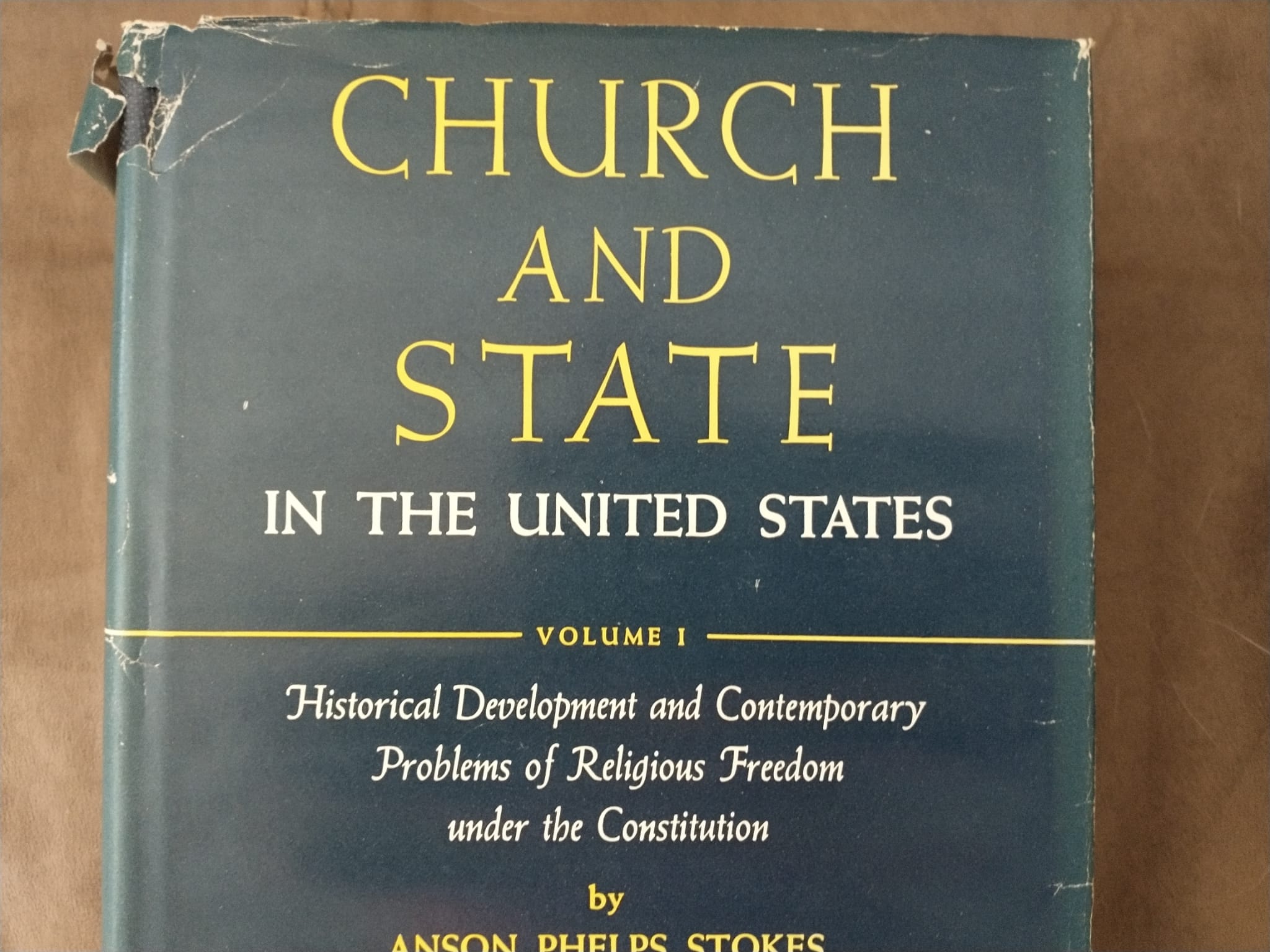
Politico and other secular media make many other false associations and assertions regarding the topic. There are well over 50 books on Christian Nationalism just in the last several years (see here) that try to claim all this activity of Christians in politics is new and dangerous. An earlier post of mine on Dec 14, 2023 listed a few books on the impact of Christianity on history and culture, including America. There is plenty of evidence of Christian political activism throughout America’s history. Just a few old books in my library on America’s Christian influence are: The Christian Life and Character of the Civil Institutions of the United States (1864, Morris), The History of the Great Republic Considered from a Christian Standpoint (1868, Peck), The Religious Background of American Culture (1930, Hall), Church and State in the United States (1950, Stokes). You are welcome to recommend many more.
Someone who they might call a Christian Nationalist is below. This real person (who I will leave un-identified for now) is a government leader who attends, funds and helps in various ways in a non-denominational Evangelical all-white church in the South, and who brings his beliefs into the political arena in the following ways:
public messages and writings frequently mentioning God and religious beliefs. He sometimes claims that our nation’s history and government were uniquely favored and shaped by God and the Christian religion – and still should be.
frequent meetings with pastors and preachers seeking their support, and likewise his advocacy for some of them and their church members to be active in politics.
personal donations to many Christian pastors, churches, and their causes, but also his use of government funds and other patronage for support of pastors, churches and religious causes.
special legal defense of their beliefs by proposing laws and using courts to protect their religious activity (even when contrary to the well-established precedents and “settled” law) and to impose penalties on those who undermine those beliefs.
granting privileges and even empowering government to sponsor faith leaders’ religious gatherings and ceremonies in public buildings, etc. He openly helps bring religion into the arena of political and social affairs.
The media would describe some of these things as dangerous to democracy and America’s secular constitutional founding. Basically anything liberal/progressives find in opposition to their political and cultural agenda is portrayed as the work of Christian Nationalists, and then is associated with something or someone extreme in order to make it look dangerous and out of the mainstream customs of America.
But the problem they have is that these are not policies or activities that are new. Almost any of America’s Founders believed that way and today would be called Christian Nationalists.
Do you know who the un-identified person was that did the list of five actions above? Not Speaker Mike Johnson. Not Pence. Not Trump. Who was it: Thomas Jefferson.
[Documentation of some is found in the subscribers section below, or you can get full context and analysis in the book Doubting Thomas? The Religious Life and Legacy of Thomas Jefferson, co-authored by myself and Jerry Newcombe. Also get its companion volume of source documents: The Selected Religious Letters and Papers of Thomas Jefferson. It has over 50 letters and docs never published anywhere before. Order here.]
Yes, the real Jefferson would be perceived as dangerous today if alive and politically active in this same way. Christians have always been involved in politics and tried to shape culture in the context of democratic pluralism. None have led a coup or taken away the rights of others.
So don’t let modern “documentaries” and social media intimidate you. You are standing in the mainstream of American history. I do not identify with so-called Christian Nationalism, but I am unashamed to be a Christian activist.
We just observed President’s Day. Almost every one of our Presidents have promoted Christian beliefs in their capacity as President. I recommend that you read all their Inaugural Addresses. Even Jefferson who, after taking the oath to be President, knelt and kissed the Bible, and said:
“I shall need, too, the favor of that Being in whose hands we are, who led our fathers, as Israel of old, from their native land and planted them in a country flowing with all the necessaries and comforts of life; who has covered our infancy with His providence and our riper years with His wisdom and power, and to whose goodness I ask you to join in supplications with me that He will so enlighten the minds of your servants, guide their councils, and prosper their measures that whatsoever they do shall result in your good, and shall secure to you the peace, friendship, and approbation of all nations.”
Was Jefferson a Christian Nationalist? Not the modern caricature invoking theocratic coercion. But Jefferson was truly a leader who did religious-informed policy-making and brought his values and beliefs into the public square. We should welcome more like him today in American politics.
[For some examples of Jefferson’s actions in the five items above, subscribe and keep reading.]
The content below was originally paywalled.
Below is just a small portion of documentation of Jefferson’s support of religion in public life. Before looking at them it is important to note that he attended Bible-believing orthodox congregations almost his entire life. He was on the vestry and tithed to His Anglican Church up to 1777. Then wrote the founding charter of a new Calvinistical Reformed Church and pledged the most money for its pastor – an Evangelical preacher. Then he was a tithing member of an Episcopal church in Washington, DC and also attended many interdenominational services in the Capitol as well as in his hometown courthouse which he called “the common temple.” And finally he resumed as a tithing member in his local Episcopal church for the last years of his life. His account books and letters mention multiple times of church attendance.
But he also brought his faith into his public service in five main ways. A few examples are listed under each one:
public messages and writings frequently mentioning God and religious beliefs. He sometimes claim that our nation’s history and government were uniquely favored and shaped by God and Christianity and still should be.
Countless documents such as his draft of Declaration of Independence,
proclamation of thanksgiving and prayer as Governor,
annual addresses to Congress and the nation (such as his Inaugural above),
multitudes of letters.
frequent meetings with pastors and preachers seeking their support, and likewise his advocacy for some of them and their church members to be active in politics.
1768 letter to Rev. Fontaine
1792 letter to endorse Rev. Clay for Congress
1802 meeting with Rev. Leland
personal donations to many Christian pastors, churches, and their causes, but also his use of government funds and other patronage for support of pastors, churches and religious causes.
account books show donations to well over 125 different ministers & churches;
His 1804 letter to Ursuline Nuns offering his government’s “patronage”;
His treaties and directives to staff to fund missions to Indians, schools, etc.
special legal defense of their beliefs by proposing laws to protect their religious activity (even when it is contrary to the well-established precedents and “settled” law) and to imposing penalties on those who undermine those beliefs.
His Virginia Statute for Religious Freedom;
His Virginia statute for Punishing Sabbath Breakers;
His letter to Rev. Moore in 1800
granting privileges and even empowering government to sponsor faith leaders’ religious gatherings and ceremonies in public buildings, etc. He openly helps bring religion into the arena of political and social affairs.
His enabling of church services in the Capitol;
His personal request for Baptist and Presbyterian ministers to preach there or in his local courthouse;
His policies for religious groups use of grounds at the state University of Virginia.
JEFFERSON STATEMENTS AND ACTIONS FAVORING NON-SECULAR GOVERNMENT
It is amazing that Thomas Jefferson is used today to promote a totally secular government, especially when you consider the following facts. Note: this list[A1] —much of which has been seen in previous chapters—shows a consistency throughout his life, even through phases of partial doubt or unbelief:
1768 Jefferson said that “the place of Chaplain to the House of Burgesses . . . should be reserved. . . .”
1774 Jefferson asked for a special Fast Day service at home after he advocated a resolution “Designating a Day of Fasting, Humiliation, and Prayer” that was adopted by the House of Burgesses.
1776 While in Congress Jefferson proposed a national seal with a Biblical image “. . . expressive of the divine presence, and . . . [the] Motto: Rebellion to tyrants is obedience to God.”
1777 He prepared a package of bills on religion not only for religious freedom but also for “. . . for Punishing Disturbers of Religious Worship and Sabbath Breakers” (#84), and “. . . for Appointing Days of Public Fasting and Thanksgiving” (#85).
1777 He advocated a bill “. . . for Establishing General Courts” with required oaths and a prayer “so help me God” (#88).
1779 As Governor he issued a Proclamation for a Public Day of Thanksgiving and Prayer.
1800 He said of the Virginia constitutional prohibition of clergy holding government office that “after 17 years more of experience and reflection, I do not approve. . . . The clergy here seem to have relinquished all pretension to privilege and to stand on a footing with lawyers, physicians, etc. They ought therefore to possess the same rights.”
1800 Jefferson as leader of the Senate approved that the Capitol building be used for worship services. He personally attended many times over the years he lived in Washington.
1800 When Jefferson was sworn in as President he added the additional voluntary appeal to God’s aid at the end of the oath and then mentioned God in his First Inaugural Address.
1802 As President he arranged for Rev. John Leland to speak in the Executive Mansion and preach in the Capitol. He did the same for Rev. John Glendy and others.
1803 He had $300 in federal funds given to help Presbyterian Rev. Gideon Blackburn build a school for the Cherokees in Tennessee.
1803 He presented a Treaty with Kaskaskia and other Tribes which provided federal funds for the construction of churches and salaries for Catholic priests and missionaries.
1803 He promised the Nuns of the Order of St. Ursula at New Orleans “the patronage of the government it is under. Be assured it will meet all the protection which my office can give it.”
1806 He “Gave . . . 50 Dollars to the order of Governor Wilkinson or other acting governor of Louisiana for building a church there.”
1804 Jefferson wrote to the Senate Chaplain “to ask that indulgence for the revd. Mr. Glendy, [A2] a Presbyterian clergyman” be given to preach in the Capitol “in this place next Sunday.”
1804 He signed an act that approved the payment of chaplains for the government.
1805 In his Second Inaugural Address he said that “religious exercises,” according to “the Constitution, . . . [are] under the direction and discipline of State or Church authorities . . .” and then he asked citizens “to join with me in supplication that He [God] will enlighten the minds of your servants, guide their councils, and prosper their measures.”
1805 As chairman of the D.C. schools he hired two clergymen as its first teachers and permitted the Bible and Watt’s hymnals be used for teaching reading.
1807 He said the idea that he “wanted government to be without religion” was “a lie.”
1807 He wrote that “the councils of the General Government in their decisions . . . [were drawn from] the principles of humanity, the precepts of the gospel, and the general wish of our country.”[A3]
1807 He wrote that “liberty to worship our creator . . . [is] deemed in other countries incompatible with good government, and yet proved by our experience to be its best support.”
1808 He wrote that the Constitution “reserves to the states the powers not delegated to the United States [i.e., the Tenth Amendment]. Certainly . . . [no] authority in religious discipline has been delegated to the general [i.e., national] government. It must then rest with the states. . . . what might be a right in a state government, was a violation of that right when assumed by another [i.e. national government].”
1808 He signed an Act Appointing A Chaplain to Each Brigade of the Army.
1809 He wrote: “. . . I join in supplications to that Almighty Being, who has heretofore guarded our councils, still to continue His gracious benedictions towards our country, and that yourselves may be under the protection of His divine favor.”
1811 He said to his former Senate Chaplain: “. . . I shall be glad to see in print discourses which I heard delivered with much satisfaction [in the church services in the Capitol] . . . ; my particular thanks are due to you. . . . To those of your society [i.e., Presbyterians] we owe an acknowledgement of the zeal they have generally manifested for the republican principles of our government. . . .”
1817 He and the board of Central College (which developed into the University of Virginia) approved the program in advance for the laying of the cornerstone that included prayer and Scripture reading by Episcopalian Rev. William King.
1817 He and the board of the College (i.e., the University of Virginia) “. . . agreed that application be made to Dr. [Rev. Samuel] Knox, of Baltimore, to accept the professorship of languages, belles-lettres, rhetoric, history and geography. . . .”
1817 He wrote a draft of the Elementary School Act which deleted the sentence that “No religious reading, instruction or exercise, shall be prescribed or practiced (in the elementary schools) inconsistent with the tenets of any religious sect or denomination.”
1817 He wrote: “Our right to life, liberty…is not left to the feeble and sophistical investigations of reason, but is impressed on the sense of every man. We do not claim these under the charters of kings or legislators, but under the King of kings.”
1824 He and the board of the University of Virginia issued Regulations saying “. . . one of (the Rotunda’s) large elliptical rooms on its middle floor shall be used for . . . religious worship (and that) . . . the students of the University will be free, and expected to attend.”
1824 He wrote that anyone can see “. . . in my catalogue [for the University] . . . religion, as supplements to law in the government of man. . . .”
1825 He wrote “to frame a set of regulations of equality and impartiality among the multiplied sects. . . . University buildings [being used only by] . . . two particular sects, would be a deviation. . . .”