Part 15 of a Political Narrative of the New Testament
In the previous post we examined the main political principles and ideas in Peter’s Second Letter, Paul’s Second Letter to Timothy, Jude’s Letter and Jesus’ Letters to seven citizen assemblies (part of the beginning of Revelation).
[Note: This series of posts does not assert that politics is primary in the New Testament, however, there are often overlooked principles and ideas that are worthy of attention. For context we paraphrase certain Bible terms by how it was understood at the time. We ask ourselves: ‘What did this word or phrase mean to those first-century hearers or readers? Then we paraphrase the scripture to reflect that understanding. A simple example is the word ekklesia which today is translated church and means a religious meeting to most people, but in New Testament times it was understood by everyone to be a citizen assembly focused on solving community problems. Modern readers of Scripture focus only on the religious activities and teachings in Acts and the Epistles. But Christians were active in politics from the beginning. Failure to understand this and to believe Christianity only belongs in the religious sphere leads some people today to wrongly judge Christian social activism as seeking improper religious imposition of beliefs using state coercion, i.e. ‘Christian Nationalism’ or Theocracy or Dominionism. Christian activism historically is mostly in the context of democratic pluralism.]
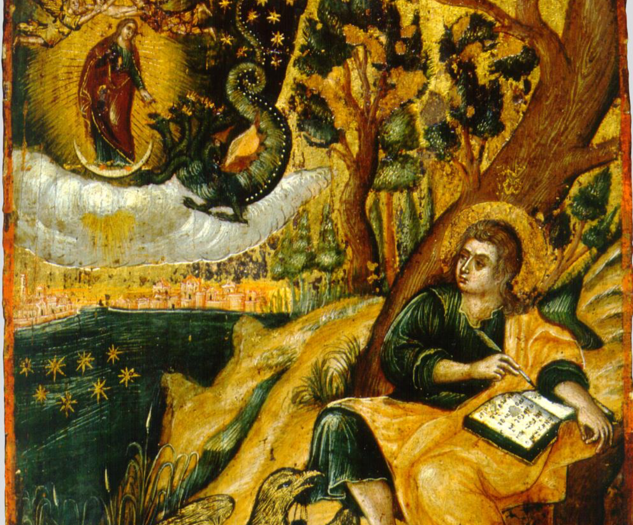
John’s Strategic Insight (Revelation) of Jesus, cAD68
Although some scholars think that the book of Revelation was written at a later date, it is plausible that it was composed about 68AD while Jerusalem was under siege and about to be destroyed by the Romans. The emissary John was arrested and from exile off the coast of Turkey wrote personalized letters from Jesus to seven citizen assemblies of present-day Turkey. See the previous post for specific political ideas in each of the letters from Jesus found in chapter two and Three.
John enclosed to all of them a Strategic Insight which is how we paraphrase both the word “Revelation” and “prophecy” (see previous post on 1 Corinthians). [Usually the strategic insight is for society, not just personal matters.]
In Chapter one John explains that this communication was “The Strategic Insight of Jesus the pre-chosen world Ruler” in context of the “things which must shortly take place.” He adds that “this strategic worldview” was for “the seven citizen assemblies” which are in Turkey. It was not written for religious worship groups, but for councils of believers involved in the civic affairs of their nation.
The central fact was then restated: “…Jesus the pre-chosen world Ruler” and present “ruler over the heads of states of the earth” and then he adds a new fact: He “….has made us heads of states.” “To Him…be… dominion forever.” John says Jesus is not the future ruler over kings, but present, and that we have also been made such with Him in the present. Of course, although spoken as a finished work, it is to be understood the way we would a “president-elect” of the USA. The election is done, but the time of assuming power is still to come. God has elected both Jesus and us to rule, but the full manifestation is ahead.
John makes it clear that he was arrested and in exile because of the word of God and especially his message “of Jesus pre-chosen world ruler.” This message, not the message of salvation only, is what brings conflict and persecution. He calls himself their “companion in the…government…of Jesus the pre-chosen world Ruler.”
God told John to write the strategic insight “…in a book and send it to the seven citizen assemblies” of Turkey. The main insight was that he “[saw]…One like the Son of Man….” This phrase clearly connects Jesus back to the vision of Daniel which speaks of God’s rule over nations in history (see Daniel 7:13,14).
God tells John that “stars” represent the messengers of the “seven citizen assemblies” and the “lampstands” represent the “seven citizen assemblies” themselves. This was a way to understand the whole Revelation – certain words and phrases were figurative or symbolic of very real things or ideas. They were not to be interpreted literally.
A Few of the Key Political Ideas in Revelation
The Strategic Insight for Society (i.e., Revelation) that was enclosed to each citizen assembly used much figurative and symbolic language that was often associated with political principles and ideas, but we will not spend much time to explain everything in Revelation chapters 5-22. But a few obvious political ideas are important to notice:
Chapter five says: ‘[You] have…made us heads of state…And we shall reign on the earth.…’
Chapter spoke of “…the Social strategists” and then John was told: “You must see/speak Strategic insights for society…about nations…and heads of state.”
Chapter eleven says: “’The governments of this world have become governments of our Sovereign and of His pre-chosen world Ruler’… And the twenty-four senior statesmen [said]: ‘…Sovereign God Almighty,…[You] have taken Your great power and reigned. [Now it is] The nations’…time… [to] be governed, and…Social strategists [rewarded]…’”
Chapter twelve says: “the government of our God, and the power of His pre-chosen Head of State have come.”
Chapter nineteen says: “…your brethren…have the spirit of Strategic insights for society….[His] name: Head of Heads of State and Sovereign of Sovereigns….”
Chapter twenty-two spoke of “… the healing of the nations” which connects back to the fifth sign in Mark 16 where Jesus spoke of healing “the sick” in context of nations. Also in chapter 22 it says: “….they shall reign forever” and speaks of the “…Sovereign God of the holy Social strategists….” The final words of the book say: ‘I, Jesus…testify to you these things in the citizen councils…[of the importance of] the strategic worldview of this book.” And ends with the final prayer: “…come, Sovereign Jesus!”
John’s Letters to leaders in Citizen Assemblies, cAD90s
Almost certainly these final letters of John the Emissary were written near the end of the first century, about 20 years or so after the epistles that we studied in our previous post. A new era of extreme persecution was taking place by the instigation of the pagan Roman Emperor Domitian but primarily in Rome and present-day Turkey.
In chapter one and two God’s just nature is cited as the basis for his forgiveness of our sins, through the aid of Jesus our legal defender in court, who also happens to be the pre-chosen world Ruler. His Transcendent Political Priorities are the standard for evaluating who really knows God. These are mentioned six times for emphasis.
But John explains that there are already many anti-christs which paraphrased for now it was understood at that time might be “rivals of the pre-chosen world Ruler.” These rivals John said give their public endorsement for those who oppose us. But it doesn’t matter because we have the public endorsement from the real pre-chosen world Ruler.
Also in chapter three John talks about the (self)-governmental failure to maintain order such as when the first murder in history occurred when Cain killed his brother (Gen 4). That story of lawlessness in Genesis is why God established human civil government and law for the first time under Noah’s leadership (Gen 9:6). The corrupted human heart is the reason for law and government. God’s transcendent political priorities are cited four times by John and are expected of us, but it is impossible without abiding in Jesus’ love.
John in chapter four explains more of the causes of disorder. He says there already exist in society many “false Social strategists….And this is the spirit of the rival pre-chosen world Ruler, which you have heard was coming, and is now already in the world…” There are many who push their strategy for nations but whose source of ideas are not from God, but the good news is that God’s policy decisions will make it right, so we can be bold in this world and hold to the Transcendent Political Priorities that “we have from Him.”
In chapter five John adds that keeping God’s Transcendent Political Priorities are not burdensome for us who love God, even though “the whole world lies under the sway of the wicked one.” The key is to avoid idols both for us as individuals and for our nations. Idolatry of the state, or statism, has been a problem for all ages.
His Second and Third Letters
When John writes his second letter to the “elect lady and her children” it is perhaps a way of identifying a church or citizen assembly, but perhaps obliquely due to the severe persecution at the time. He identifies himself not as an Apostle but as a Senior statesman.” Again, this is a term related to the function of a citizen assembly, rather than just a leader in a group that gathers for religious activity.
He cites the transcendent political priorities from the Father and the essential core idea: All must confess or identify clearly with Jesus the pre-chosen world Ruler who has already come on earth in the flesh. This is what brings conflict with worldly kingdoms, not religious beliefs about the future but political beliefs about the highest government now! And anyone who denies this identifies with the rival pre-chosen world Ruler. It’s simply a battle of governments in the nations. At the end of the letter John uses democratic language to say the “children of your elect sister greet you” which may speak of another church or citizen assembly.
When John writes his third letter he again identifies himself as a Senior statesman and addressed problems in their citizen assembly. Some leaders who loved having preeminence had unjustly expelled some brethren “out of the citizen assembly.” John promised to come in person to address it.
After this key political principles and ideas would henceforth be expressed in non-Scriptural texts such as Didache and then writings of Irenaeus, Tertullian, Old Latin and Syriac Bible texts, and later writings. There is value in studying them as well, but this post ends our study of what God has given to us in the inerrant Word of God.
[In the paid subscriber section below I have added some summary of the lives, persecution and deaths of the Apostles.]
The content below was originally paywalled.
Summary of Lives of the Twelve Apostles (Emissaries) of Christ
The Twelve Apostles of Jesus Christ each had unique ministries and met different fates as they spread the teachings of Christianity. Here’s a summary of the later ministries and deaths of each:
Peter (Simon Peter):
Ministry: Peter was a leading figure in the early Christian church, especially in Jerusalem. He is traditionally believed to have traveled to Rome.
Death: Peter was crucified upside down in Rome during the reign of Emperor Nero, around 64 AD, as he felt unworthy to die in the same manner as Jesus.
Andrew:
Ministry: Andrew, Peter’s brother, is said to have preached in regions including Scythia, Greece, and Asia Minor.
Death: He was crucified on an X-shaped cross (St. Andrew’s Cross) in Patras, Greece.
James the Greater:
Ministry: James, the son of Zebedee, preached in Jerusalem and Judea. He is believed to have traveled to Spain.
Death: He was beheaded in Jerusalem by order of King Herod Agrippa I, around 44 AD, becoming the first apostolic martyr.
John:
Ministry: John, the brother of James, is traditionally associated with Ephesus and is believed to have written the Gospel of John, three epistles, and Revelation.
Death: He is believed to have died a natural death in Ephesus around 100 AD, the only apostle to do so.
Philip:
Ministry: Philip preached in Phrygia (modern-day Turkey) and other regions.
Death: He was martyred in Hierapolis by crucifixion or by being impaled on a cross.
Bartholomew (Nathanael):
Ministry: Bartholomew preached in India, Armenia, Ethiopia, and Southern Arabia.
Death: He was flayed alive and beheaded in Armenia.
Matthew (Levi):
Ministry: Matthew, the former tax collector, is said to have preached in Ethiopia, Persia, and Parthia.
Death: He was martyred, possibly in Ethiopia, though accounts of his death vary (by stabbing or burning).
Thomas (Didymus):
Ministry: Thomas is traditionally believed to have preached in India, where he established several churches.
Death: He was martyred near Chennai, India, by being speared to death.
James the Less:
Ministry: James, the son of Alphaeus, is often identified with James the Just, who led the church in Jerusalem.
Death: He was martyred in Jerusalem, possibly by being thrown from the pinnacle of the Temple and then beaten to death with a club.
Thaddeus (Jude):
Ministry: Jude, also known as Thaddeus, preached in Judea, Samaria, Syria, Mesopotamia, and Libya.
Death: He was martyred in Persia, possibly by being clubbed to death.
Simon the Zealot:
Ministry: Simon preached in various places including Egypt, North Africa, and possibly Britain.
Death: He was martyred, possibly in Persia by being sawn in half or crucified.
Matthias:
Ministry: Matthias, chosen to replace Judas Iscariot, preached in Judea and possibly Ethiopia.
Death: He was martyred by stoning and then beheading.
These accounts are based on early Christian traditions and writings, and historical details can vary. The apostles played critical roles in establishing the early church and spreading the message of Christianity throughout the world.