Excerpts from Bradford and Winslow’s contemporary accounts
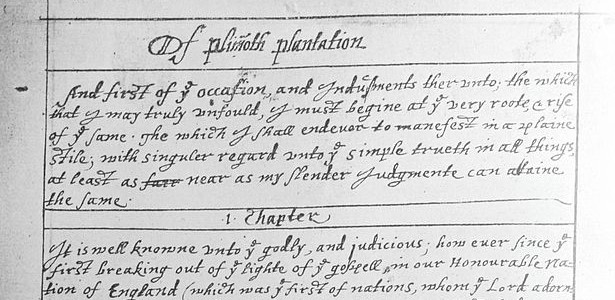
Our previous post showed the Christian character and leadership in the first English colony at Jamestown, Virginia. A minor unplanned event there was the purchase of slaves off a ship in 1619, from which the distorted emphasis of the 1619 Project arises. In all history involving humans, evidence of sin and of righteousness can be found. One year after that event was the arrival of the Pilgrims in the settlement of Plymouth Colony in Massachusetts.
Both the Jamestown and the Plymouth colonies were deeply Christian in motivation, but clearly 1620 was an outstanding defining moment for America. A book which every American and Christian should read, but rarely even mentioned in our schools today, is William Bradford’s Of Plymouth Plantation. This firsthand contemporary history is not a false romance by a historian looking back much later. This account plainly reveals God’s hand in the Pilgrim’s lives written in language thoroughly Christian by their Governor. Without modernizing the spelling it is difficult to read, but worth the effort. Below are excerpts from Bradford’s original manuscript, written in 1647.
“Of Plimoth Plantation” by William Bradford
“When as by the travell & diligence of some godly & zealous preachers, & Gods blessing on their labours, as in other places of ye land, so in ye North parts, many became inlightened by ye word of God, and had their ignorance & sins discovered unto them, and begane by his grace to reforme their lives, and make conscience of their ways… So many therfore of these processors as saw ye evill of these things, in thes parts, and whose harts ye Lord had touched wth heavenly Zeale for his trueth, they shooke of this yoake of antichristian bondage, and as ye Lords free people, joyned them selves (by a covenant of the Lord) into a church estate, in ye felowhsip of ye gospell, to walke in all his wayes, make known or to be made known unto them, according to their best endeavours, whatsoever it should cost them, the Lord assisting them. And that it cost them something this ensewing historie will declare…
“Of their departure into Holland”
“Being thus constrained to leave their native soyle and countrie, their lands & livings, and all their freinds & famillier acquaintance, it was much, and thought marvelous by many. But to goe into a countrie they knew not (but hearsay), wher they must learne a new language, and get their livings they knew not how, it being a dear place, & subjecte to ye misseries of warr, it was by many thought an adventure almost desperate, a case intolerable, & a misserie worse then death. Espetially seeing they were not aquainted with trads nor traffique, (by which yt countrie doth subsiste,) but had only been used to a plaine countrie life, & ye inocente trade of husbandrey. But these things did not dismay them (though they did some times trouble them) for their desires were sett on ye ways of God, & to injoye his ordinances; but they rested on his providence, & knew whom they had beleeved.”
“Ther was a large companie of them purposed to get passage at Boston in Lincoln-shire, and for that end had hired a shipe wholy to them selves, & made agreement with the maister to be ready at a certaine day, and take them and their goods in, at a conveniente place, wher they accordingly would all attende in readiness. So after long waiting, & large expences, though he kepte not day with them, yet he came at length & tooke them in, in ye night. But when he had them & their goods abord, he betrayed them, haveing before hand complotted with ye serchers & other officers so to doe; who tooke them, and put them into open boats, & ther rifled & ransaked them, searching them to their shirts for money, yea even ye women furder then became modestie; and then caried them back into ye towne, & made them a spectackle & wonder to ye multitude, which came flocking on all sids to behould them… After a months imprisonmente, ye greatest parte were dismiste, & sent to ye places from whence they came; but 7. of ye principall were still kept in prison…”
“The nexte spring after, ther was another attempte made by some of these & others, to get over at an other place. And it so fell out, that they light of a Dutchman at Hull, having a ship of his owne belonging to Zealand; they made agreemente with him, and acquainted him with their condition, hoping to find more faithfulness in him, then in ye former of their owne nation. He bad them not fear, for he would doe well enough. He was by appointment to take them in betweene Grimsbe & Hull, wher was a large comone a good way distante from any towne. Now aganst the prefixed time, the women & children, with ye goods, were sent to ye place in a small barke, which they had hired for yt end; and ye men were to meete them by land. But it so fell out, that they were ther a day before ye snipe came, & ye sea being rough, and ye women very sicke, prevailed with ye seamen to put into a creeke hardby, wher they lay on ground at lowwater. The nexte morning ye shipe came, but they were fast, & could not stir till about noone. In ye mean time, ye shipe maister, perceiving how ye matter was, sente his boate to be getting ye men abord whom he saw ready, walking aboute ye shore. But after ye first boat full was gott abord, & she was ready to goe for more, the mr espied a greate company, both horse & foote, with bills, & gunes, & other weapons; for ye countrie was raised to take them. Ye Dutchman seeing yt, swore his countries oath, ‘sacremente,’ and having ye wind faire, waiged his Ancor, hoysed sayles, & away. But ye poore men which were gott abord, were in great distress for their wives and children, which they saw thus to be taken, and were left destitute of their helps; and them selves also, not having a cloath to shifte them with, more then they had on their baks, & some scarce a peney aboute them, all they had being abord ye barke. It drew tears from their eyes, and any thing they had they would have given to have been a shore againe; but all in vaine, ther was no remedy, they must thus sadly part. And afterward endured a fear-full storme at sea, being 14. days or more before yey arived at their porte, in 7. wherof they neither saw son, moone, nor stars, & were driven near ye coast of Norway; the mariners them selves often despairing of life; and once with shriks & cries gave over all, as if ye ship had been foundred in ye sea, & they sinking without recoverie. But when mans hope &: helpe wholy failed, ye Lords power & mercie appeared in ther recoverie; for ye ship rose againe, & gave ye mariners courage againe to manage her. And if modestie woud suffer me, I might declare with what fervente prayres they cried unto ye Lord in this great distres, (espetialy some of them,) even without any great distraction, when ye water rane into their mouthes & ears; & the mariners cried out, “We sinke, we sinke; they cried (if not with mirakelous, yet with a great hight or degree of devine faith), Yet Lord thou canst save, yet Lord thou canst save; with shuch other expressions as I will forbeare. Upon which ye ship did not only recover, but shortly after ye violence of ye storme begane to abate, and ye Lord filed their afflicted minds with shuch comforts as every one canot understand, and in ye end brought them to their desired Haven, wher ye people came flockeing admiring their deliverance, the storme having ben so longe & sore, in which much hurt had been don, as ye masters freinds related unto him in their congrattulations.”
“But to returne to ye others wher we left. The rest of ye men yt were in greatest danger, made shift to escape away before ye troope could surprise them; those only staying yt best might, to be assistante unto ye women. But pitifull it was to see ye heavie case of these poore women in this distress; what weeping & crying on every side, some for their husbands, that were caried away in ye ship as is before related; others not knowing what shoud become of them, & their little ones; others againe melted in teares, seeing their poore litle ones hanging aboute them, crying for feare, and quaking with could. Being thus aprehended, they were hurried from one place to another, and from one justice to another, till in ye ende they knew not what to doe with them; for to imprison so many women & innocent children for no other cause (many of them) but that they must goe with their husbands, semed to be unreasonalbe and all would crie out of them; and to send them home againe was as difficult, for they aledged, as ye trueth was, they had no homes to goe to, for they had either sould, or otherwise disposed of their houses & livings…”
“But yt I be not tedious in these things, I will omitte ye rest, though I might relate many other notable passages and troubles which they endured & underwente in these their wanderings &travells both at land & sea; but I hast to other things. Yet I may not omitte ye fruite that came hearby, for by these so publick troubls, in so many eminente places, their cause became famouss, & occasioned many to looke into ye same; and their godly cariage & Christian behaviour was such as left a deep impression in the minds of many. And though some few shrunk at these first conflicts & sharp beginings, (as it was no marvell,) yet many more came on with fresh courage, & greatly animated others. And in ye end, notwithstanding all these stormes of oppossition, they all gatt over at length, some at one time & some at an other, and some in one place & some in an other, and mette togeather againe according to their desires, with no small rejoycing.
“Of their setting in Holand, & their miner of living”
“Being now come into ye Low Countries, they saw many… faire & bewtifull cities, flowing with abundance of all sorts of welth & riches, yet it was not longe before they saw the grime & grisly face of povertie coming upon them like an armed man, with whom they must bukle & incounter, and from whom they; could not flye; but they were armed with faith & patience against him, and all his encounters; and though they were sometimes foyled, yet by Gods assistance they prevailed and got ye victorie…
“And when they had lived at Amsterdam aboute a year… they removed to Leyden, a fair & bewtifull citie, and of a sweete situation, but made more famous by ye universitie wherwith it is adorned, in which of late had been so many learned men…. And first though many of them weer poore… the Dutch (either bakers or others) would trust them in any reasonable matter when yey wanted money. Because they had found by experience how carfull they were to keep their word, and saw them so painfull & diligente in their callings; yea, they would strive to gett their custome, and to imploy them above others, in their worke, for their honestie & diligence….
“Ye reasons & causes of their remooval”
After they had lived in this citie about some 11. or 12. years, (which is ye more observble being ye whole time of yt famose truce between that state & ye Spaniards,) and sundrie of them were taken away by death, & many others begane to be well striken in years, the grave mistris Experience haveing taught them many things, those prudent governours with sundrie of ye sagest members begane both deeply to apprehend their present dangers, & wisely to foresee ye future, & thinke of timly remedy. In ye agitation of their thoughts, and much discours of things hear aboute, at length they began to incline to this conclusion, of remoovall to some other place. Not out of any newfanglednes, or other such like giddie humor, by which men are oftentimes transported to their great hurt & danger, but for sundrie weightie & solid reasons; some of ye cheefe of which I will hear breefly touch. And first, they saw & found by experience the hardnes of ye place & countrie to be such, as few in comparison would come to them… yea, some preferred & chose ye prisons in England, rather then this libertie in Holland, with these afflictions. But it was thought that if a better and easier place of living could be had, it would draw many, & take away these discouragements.
“They saw that though ye people generally bore all these difficulties very cherfully, & with a resolute courage, being in ye best & strength of their years, yet old age began to steale on many of them, (and their great & continuall labours, with other crosses and sorrows, hastened it before ye time,)… many of their children, by these occasions, and ye great licentiousnes of youth in yt countrie, and ye manifold temptations of the place, were drawne away by evill examples into extravagante & dangerous courses, getting ye raines off their neks, & departing from their parents. Some became souldiers, others tooke upon them farr viages by sea, and other some worse courses, tending to dissolutnes & the danger of their soules, to ye great greefe of their parents and dishonour of God. So that they saw their posteritie would be in danger to degenerate & be corrupted.
“Lastly, (and which was not least,) a great hope & inward zeall they had of laying some good foundatin, or at least to make some way therunto, for ye propagating & advancing ye gospell of ye kingdom of Christ in those remote parts of ye world; yea, though they should be but even as stepping-stones unto others for ye performing of so great a work.
“These, & some other like reasons, moved them to undertake this resolution of their removall; the which they afterward prosecuted with so great difficulties, as by the sequell will appeare.
“The place they had thoughts on was some of those vast & unpeopled countries of America, which are frutfull & fitt for habitation, being devoyed of all civill inhabitatnts, wher ther are only salvage & brutish men, which range up and downe, litle otherwise then ye wild beasts of the same. This proposition being made publike and coming to ye scarring of all, it raised many; variable opinions amongst men, and caused many fears & doubts amongst them selves…. For ther they should be liable to famine, and nakednes, & ye wante, in a maner, of all things. The chang of aire, diate, & drinking of water, would infecte their bodies with sore sickneses, and greevous diseases. And also those which should escape or overcome these difficulties, should yett be in continuall danger of ye salvage people, who are cruell, barbarous, & most trecherous, being most furious in their rage, and merciles wher they overcome; not being contente to kill, & take away life, but delight to tormente men in ye most bloodie maner that may be;…. It was furder objected, that it would require greater sumes of money to furnish such a voiage, and to fitt them with necessaries, then their consumed estats would amounte too; and yett they must as well looke to be seconded with supplies, as presently to be transported. Also many presidents of ill success, & lamentable misseries befalne others in the like designes, were easie to be found, and not forgotten to be aledged; besids their owne experience, in their former troubles & haardships in their removall into Holand, and how hard a thing it was for them to live in that strange place, though it was a nieghbour countrie, & a civill and rich comne wealth.
“It was answered, that all great & honourable actions are accompanied with great difficulties, and must be both enterprised and overcome with answerable courages. It was granted ye dangers were great, but not desperate; the difficulties were many, but not invincible… and all of them, through ye help of God, by fortitude and patience, might either be borne, or overcome…
“Preparation to this waightie vioage”
“So being ready to departe, they had a day of solleme humiliation, their pastor taking his texte from Ezra 8:21. ‘And ther at ye river, by Ahava, I proclaimed a fast, that we might humble ourselves before our God, and seeke of him a right way for us, and for our children, and for all our substance.’ Upon which he spente a good parte of ye day very profitably, and suitable to their presente occasion….
“At their parting Mr. Robinson write a leter to ye whole company, which though it hath already bene printed, yet I thought good here likwise to inserte it;…
“Loving Christian friends, I doe hartily & in ye Lord salute you all,….
And first, as we are daly to renew our repentance with our God, expetially for our sines known, and generally for our unknowne trespasses…. sine being taken away by ernest repentence & ye pardon therof from ye Lord sealed up unto a mans conscience by his spirite, great shall be his securitie and peace in all dangers, sweete his comforts in all distresses, with hapie deliverance from all evill, whether in life or in death.”
“Lastly, wheras you are become a body politick, using amongst your selves civill governmente, and are not furnished with any persons of spetiall eminencie above ye rest, to be chosen by you into office of governement, let your wisdome & godlines appeare, not only in chusing shuch persons as doe entirely love and will promote ye comone good, but also in yeellding unto them all due honour & obedience in their lawfull administrations; not behoulding in them ye ordinarinesse of their persons, but Gods ordinance for your good, not being like ye foolish multitud who more honour ye gay coate, then either ye vertuous minde of ye man, or glorious ordinance of ye Lord.
“I doe ernestly comend unto your care & conscience, joyning therwith my daily incessante prayers unto ye Lord, yt he who hath made ye heavens & ye earth, ye sea and all rivers of waters, and whose providence is over all his workes, espetially over all his dear children for good, would so guide & gard you in your wayes… John Robinson”
“Of their vioage”
After 66 days at sea, in a space no larger than a volleyball court, these 102 passengers aboard the Mayflower finally reached America. The Pilgrims intended to settle just north of the Virginia Colony but were providentially blown off course and out from under the jurisdiction of the Virginia Land Company. Being unable to sail southward due to the weather, they put ashore at Cape Cod. Had they arrived here some years earlier they would have been met by Patuxet Indians and would have found no place to settle. These Indians had killed many men who landed on their shores, but in 1617 a plague had mysteriously wiped them out (all except one, Squanto) and now neighboring tribes were afraid to come near the place for fear that some great supernatural spirit had destroyed them.
“Being thus passed ye vast ocean, and a sea of troubles before in their preparation (as may be remembred by yt which wente before), they had now no freinds to wellcome them, nor inns to entertaine or refresh their weatherbeaten bodys, no houses or much less townes to repaire too, to seeke for succoure. It is recorded in scripture as a mercie to ye apostle & his shipwraked company, yt the barbarians shewed them no smale kindnes inrefreshing them, but these savage barbarians, when they mette with them (as after will appeare) were readier to fill their sids full of arrows then otherwise. And for ye season it was winter, and they that know ye winters of yt cuntrie know them to be sharp & violent, & subjecte to cruell & feirce stormes, deangerous to travill to known places, much more to serch an unknown coast. Besids, what could they see but a hidious & desolate wildernes, full of wild beasts & wild men? and what multituds ther might be of them they knew not. Nether could they, as it were, goe up to ye tope of Pisgah, to vew from this wildernes a more goodly cuntrie to feed their hops; for which way soever they turned their eys (save upward to ye heavens) they could have litle solace or content in respecte of any outward objects. For sumer being done, all things stand upon them with a wetherbeaten face; and ye whole countrie, full of woods & thickets, represented a wild & savage heiw. If they looked behind them, ther was ye mighty ocean which they had passed, and was now as a maine barr & goulfe to seperate them from all ye civill parts of ye world. If it be said they had a ship to sucour them, it is trew; but what heard they daly from ye mr. & company? but yt with speede they should looke out a place with their shallop, wher they would be at some near distance; for ye season was shuch as he would not stirr from thence till a safe harbor was discovered by them wher they would be, and he might goe without danger; and that victells consumed apace, but he must & would keepe sufficient for them selves & their returne. Yea, it was muttered by some, that if they gott not a place in time, they would turne them & their goods ashore & leave them. Let it also be considred what weake hopes of supply & succoure they left behinde them, yt might bear up their minds in this sade condition and trialls they were under; and they could not but be very smale. It is true, indeed, ye affections & love of their brethren at Leyden was cordiall & entire towards them, but they had litle power to help them, or them selves; and how ye case stode betweene them & ye marchants at their coming away, hath allready been declared. What could now sustaine them but ye spirite of God & his grace? May not & ought not the children of these fathers rightly say: Our faithers were Englishmen which came over this great ocean, and were ready to perish in this willdernes; but they cried unto ye Lord, and he heard their voyce, and looked on their adversitie, &c. Let them therfore praise ye Lord, because he is good, & his mercies endure for ever. Yea, let them which have been redeemed of ye Lord, shew how he hath delivered them from ye hand of ye oppressour, When they wandered in ye deserte willdernes out of ye way, and found no citie to dwell in, both hungrie, & thirstie, their sowle was overshelmed in them. Let them confess before ye Lord his loving kindnes, and his wonderfull works before ye sons of men…”
The Mayflower Compact and their 1st Winter
“I shall a litle returne backe and begine with a combination made by them before they came ashore, being ye first foundation of their govermente in this place; occasioned partly by ye discontented & mutinous speeches that some of the strangers amongst them had let fall from them in ye ship—That when they came a shore they would use their owne libertie; for none had power to comand them, the patente they had being for Virginia, and not for New-england, which belonged to an other Goverment, with which Ye Virginia Company had nothing to doe. And partly that shuch an acte by them done (this their condition considered) might be as firme as any patent, and in some respects more sure. The forme was as followeth.
“In ye name of God, Amen. We whose names are underwriten, the loyall subjects of our dread soveraigne Lord, King James, by ye grace of God, of Great Britaine, France, & Ireland king, defender of ye faith, &c, haveing undertaken, for ye glorie of God, and advancemente of ye Christian faith, and honour of our king & countrie, a voyage to plant ye first colonie in ye Northerne parts of Virginia, doe by these presents solemnly & mutually in ye presence of God, and one of another, covenant & combine our selves togeather into a civill body politick, for our better ordering & preservation & furtherance of ye ends aforesaid; and by vertue hearof to enacte, constitute, and frame such just & equall lawes, ordinances, acts, constitutions, & offices, from time to time, as shall be thought most meete & convenient for ye generall good of ye Colonie, unto which we promise all due submission and obedience.”
“After they had provided a place for their goods, or comone store, (which were long in unloading for want of boats, foulnes of winter weather, and sicknes of diverce) and begune some small cottages for their habitation, as time would admitte, they mette and consulted of lawes & orders…”
“But that which was most sadd & lamentable was, that in 2. or 3. moneths time halfe of their company dyed, espetialy in Jan: & February, being ye depth of winter, and wanting houses & other comforts; being infected with ye scurvie & other diseases, which this long vioage & their inacomodate condition had brought upon them; so as ther dyed some times 2. or 3. of a day, in ye foresaid time; that of 100. & odd persons, scarce 50. remained. And of these in ye time of most distres, ther was but 6. or 7. sound persons, who, to their great comendations be it spoken, spared no pains, night nor day, but with abundance of toyle and hazard of their owne health, fetched them woode, made them fires, drest them meat, made their beads, washed their lothsome cloaths, cloathed & uncloathed them; in a word, did all ye homly & necessarie offices for them wch dainty & quesie stomacks cannot endure to hear named; and all this willingly & cherfully, without any grudging in ye least, shewing herein their true love unto their freinds & bretheren. A rare example & worthy to be remembred…”
“But about ye 16. of March a certaine Indian came bouldly amongst them, and spoke to them in broken English, which they could well understand, but marvelled at it… He tould them also of another Indian whos name was Squanto, a native of this place, who had been in England & could speake better English then him selfe.
“Afterwards they (as many as were able) began to plant ther come, in which servise Squanto stood them in great stead, showing them both ye maner how to set it, and after how to dress & tend it. Also he tould them excepte they gott fish & set with it (in these old grounds) it would come to nothing, and he showed them yt in ye midle of Aprill they should have store enough come up ye brooke, by which they begane to build, and taught them how to take it, and wher to get other provissions necessary for them; all which they found true by triall & experience…. And thus they found ye Lord to be with them in all their ways, and to blesse their outgoings & incomings, for which let his holy name have ye praise for ever, to all posteritie.”
[In today’s paid subscriber section below is another firsthand account from between November 1620 to November 1621, written mostly by Edward Winslow. First published in 1622 and often called Mourt’s Relation.]
A Journal of the Pilgrims at Plymouth; Mourt’s Relation
[excerpts from account written mostly by Edward Winslow]
Wednesday, the sixth of September, the wind coming east-north-east, a fine small gale, we loosed from Plymouth, having been kindly entertained and courteously used by divers friends there dwelling, and after many difficulties in boisterous storms, at length, by God’s providence, upon the ninth of November following, by break of the day we espied land which we deemed to be Cape Cod, and so afterward it proved. And the appearance of it much comforted us, especially seeing so goodly a land, and wooded to the brink of the sea. It caused us to rejoice together, and praise God that had given us once again to see land.
….before we came to harbor, observing some not well affected to unity and concord, but gave some appearance of faction,[17] it was thought good there should be an association and agreement that we should combine together in one body, and to submit to such government and governors as we should by common consent agree to make and choose, and set our hands to this that follows word for word.[18]
In the name of God, Amen. We whose names are underwritten, the loyal subjects of our dread sovereign lord King James, by the grace of God, of Great Britain, France, and Ireland King, Defender of the Faith, etc. Having undertaken, for the glory of God, and advancement of the Christian faith, and honor of our king and country, a voyage to plant the first colony in the northern 18parts of Virginia, do by these presents solemnly and mutually in the presence of God and one of another, covenant, and combine ourselves together into a civil body politic, for our better ordering and preservation, and furtherance of the ends aforesaid; and by virtue hereof to enact, constitute, and frame such just and equal laws, ordinances, acts, constitutions, offices from time to time, as shall be thought most meet and convenient for the general good of the colony: unto which we promise all due submission and obedience. In witness whereof we have hereunder subscribed our names; Cape Cod, the 11th of November, in the year of the reign of our sovereign lord King James, of England, France and Ireland eighteenth and of Scotland fifty-fourth, Anno Domini 1620.[19]
….Thursday, the 28th of December, so many as could went to work on the hill where we purposed to build our platform for our ordnance, and which doth command all the plain and the bay, and from whence we may see far into the sea, and might be easier impaled, having two rows of houses and a fair street. So in the afternoon we went to measure out the grounds, and first we took notice how many families there were, willing all single men that had no wives to join with some family, as they thought fit, that so we might build fewer houses, which was done, and we reduced them to nineteen families. To greater families we allotted larger plots, to every person half a pole in breadth, and three in length,[59] and so lots were cast where every man should lie, which was done, and staked out. We 43thought this proportion was large enough at the first for houses and gardens, to impale them round, considering the weakness of our people, many of them growing ill with cold, for our former discoveries in frost and storms, and the wading at Cape Cod had brought much weakness amongst us, which increased so every day more and more, and after was the cause of many of their deaths.
Friday and Saturday, we fitted ourselves for our labor, but our people on shore were much troubled and discouraged with rain and wet, that day being very stormy and cold. We saw great smokes of fire made by the Indians, about six or seven miles from us, as we conjectured.
Monday, the 1st of January, we went betimes to work. We were much hindered in lying so far off from the land, and fain to go as the tide served, that we lost much time, for our ship drew so much water[60] that she lay a mile and almost a half off, though a ship of seventy or eighty tons at high water may come to the shore.
Wednesday, the 3rd of January, some of our people being abroad to get and gather thatch, they saw great fires of the Indians, and were at their corn-fields, yet saw none of the savages, nor had seen any of them since we came to this bay.
Thursday, the 4th of January, Captain Miles Standish with four or five more, went to see if they could meet with any of the savages in that place where the fires were made. They went to some of their houses, but not lately inhabited, yet could they not meet with any. As they came home, they shot at an eagle and killed her, which was excellent meat; it was hardly to be discerned from mutton.
Friday, the 5th of January, one of the sailors found alive upon the shore a herring, which the master had to his supper, which put us in hope of fish, but as yet we had got but one cod; we wanted small hooks.
Saturday, the 6th of January, Master Martin was very 44sick, and to our judgment no hope of life, so Master Carver was sent for to come aboard to speak with him about his accounts, who came the next morning.
Monday, the 8th day of January, was a very fair day, and we went betimes to work. Master Jones sent the shallop, as he had formerly done, to see where fish could be got. They had a great storm at sea, and were in some danger; at night they returned with three great seals and an excellent good cod, which did assure us that we should have plenty of fish shortly.
This day, Francis Billington, having the week before seen from the top of a tree on a high hill a great sea as he thought, went with one of the master’s mates to see it. They went three miles and then came to a great water, divided into two great lakes, the bigger of them five or six miles in circuit, and in it an isle of a cable length[61] square, the other three miles in compass; in their estimation they are fine fresh water, full of fish, and fowl. A brook issues from it; it will be an excellent help for us in time. They found seven or eight Indian houses, but not lately inhabited. When they saw the houses they were in some fear, for they were but two persons and one piece.
Tuesday, the 9th of January, was a reasonable fair day, and we went to labor that day in the building of our town, in two rows of houses for more safety. We divided by lot the plot of ground whereon to build our town. After the proportion formerly alloted, we agreed that every man should build his own house, thinking by that course men would make more haste than working in common. The common house, in which for the first we made our rendezvous, being near finished wanted only covering, it being about twenty feet square. Some should make mortar, and some gather thatch, so that in four days half of it was thatched. Frost and foul weather hindered us much, this time of the year seldom could we work half the week….
The content below was originally paywalled.