Christian documents and primary sources that brought liberty to the world
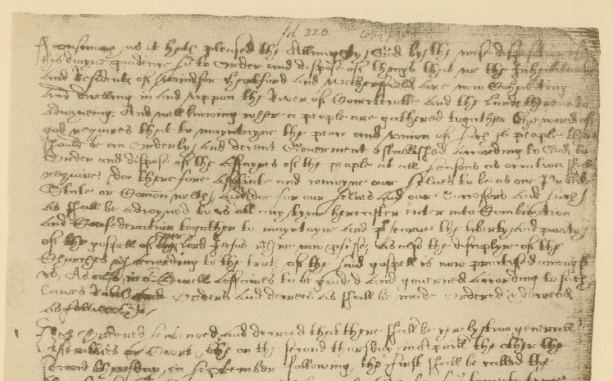
Our primary focus in the coming months is on the influences and events that led to and shaped the birth of the United States as an independent nation in 1776. In the previous posts we provided excerpts from Bradford and Winslow’s early history of Plymouth and the famous Mayflower Covenant of 1620, and then we looked at other covenants in New England between 1529 and 1639. We added excerpts from Winthrop’s 1630 Model of Christian Charity.
We also briefly listed other documents below:
1629, Charter of Masschusetts Bay
1632, Charter of Marland
1639, Fundamental Orders of Connecticut [see excerpts below]
1641, Massachusetts Body of Liberties
1643, New England Articles of Confederation [see excerpts below]
1649, Maryland Toleration Act
1662, Charter of Connecticut
1663, Charter of Rhode Island and Providence Plantations
1669, Fundamental Constitutions of Carolina
Before moving on to other matters it is important to see excerpts from a few of the ten documents above that show the depth of Christian beliefs that motivated their role in government. See below:
The Fundamental Orders of Connecticut
FORASMUCH as it hath pleased the Almighty God by the wise disposition of his divine providence so to Order and dispose of things….; And well knowing where a people are gathered together the word of God requires that to maintain the peace and union of such a people there should be an orderly and decent Government established according to God….; enter into Combination and Confederation to gather, to maintain and pressure the liberty and purity of the gospel of our Lord Jesus which we now profess, as also the discipline of the Churches, which according to the truth of the said gospel is now practised amongst us;….
[Oath for Governor:]
I, …do swear by the great and dreadful name of the everliving God, ….will further the execution of Justice according to the rule of Gods word; so help me God, in the name of the Lo: Jesus Christ.
The Articles of Confederation of the United Colonies of New England
[Massachusetts, New Plymouth, Connecticut, New Haven, and others]:
Whereas we all came into these parts of America with one and the same end and aim, namely, to advance the Kingdom of our Lord Jesus Christ and to enjoy the liberties of the Gospel in purity with peace; and whereas in our settling (by a wise providence of God)…. That, as in nation and religion, so in other respects….
The said United Colonies for themselves and their posterities do jointly and severally hereby enter into a firm and perpetual league….both for preserving and propagating the truth and liberties of the Gospel and for their own mutual safety and welfare.
An Abstract of the Laws of New England, 1641
Another document that few today have read is An Abstract of the Laws of New England compiled by John Cotton and published in 1641. It shows just how thoroughly intentional the American colonists sought to apply the Bible to their laws. We may not agree with all that they wrote, but in reading these laws we clearly can see that the idea that “Christian Nationalism” is a modern danger is ridiculous. No recent Christians come close to promoting laws like this. And yet these colonists actions did NOT result in a dangerous theocracy – rather it led eventually to the independent American nation and its outstanding model of liberty in the history of the world.
Below is the introduction to this 1641 Abstract (but most of the document is found in the later section for paid subscribers):
Eze 18:25 Yet ye say, The way of the Lord is not equal. Hear now, O house of Israel; Is not my way equal? are not your ways unequal?
[This model] far surpasseth all the municipal laws and statutes of any of the Gentile nations and corporations under the cope of Heaven. Wherefore I thought it not unmeet to publish it to the view of all, for the common good. . . . Judge equally and impartially, whether there be any laws in any state in the world, so just and equal as these be. Which, were they duly attended unto, would undoubtedly preserve inviolable the liberty of the subject against all tyrannical and usurping powers. . . .
This Abstract may serve for this use principally (which I conceive was the main scope of that good man, who was the author of it) to show the complete sufficiency of the word of God alone, to direct his people in judgment of all causes, both civil and criminal…. But the truth is, both they and we, and other the Gentile nations, are loth to be persuaded to . . . lay aside our old earthly forms of governments, to submit to the government of Christ. Nor shall we Gentiles be willing I fear, to take up his yoke which is easy, and burthen light, until he bath broken us under the hard and heavy yokes of men, and thereby weaned us from all our old forms and customs. . . .
So that there will be a necessity, that the little stone, cut out of the mountain without hands should crush and break these obstacles ere the way can be prepared for erecting his kingdom, wherein dwells righteousness. — And verily great will be the benefit of this kingdom of Christ, when it shall be submitted unto by the nations . . . [Ps. 95: 10; Isa. 66:12]. All burdens and tyrannical exactions will be removed; God will make their officers peace, and their exactors righteousness, Isa. 60:17.
For almost every law in the Abstract there are Bible references with it. Again, I personally am not saying that we should seek these laws today and I would disagree with some applications, but You cannot understand America without understanding the Christian motivation and reasoning evident in what follows for paid subscribers.
The content below was originally paywalled.
An Abstract of the Laws of New England, 1641
CHAPTER I. Of Magistrates.
1. ALL magistrates are to be chosen. Deut. 1:13, 17, 15.
First, By the free burgesses.
Secondly, Out of the free burgesses.
Thirdly, Out of the ablest men and most approved amongst them. Ex. 18, 21.
Fourthly, Out of the rank of noblemen or gentlemen among them, the best that God shall send into the country, if they be qualified with gifts fit for government, either eminent above others, or not inferior to others. Eccle. 10:17, Jer. 30:21.
2. The governor hath power, with the assistants, to govern the whole country, according to the laws established, hereafter mentioned: he hath power of himself, and in his absence the deputy-governor, to moderate all public actions of the Commonwealth, as
First, To send out warrants for calling of the general court. Josh. 24:1.
Secondly, To order and ransack all actions in the court where he sitteth: as, to gather suffrages and voices, and to pronounce sentences according to the greater part of them.
3. The power of the governor, with the rest of the counsellors, is
First, To consult and provide for the maintenance of the state and people. Num. 11:14 to 16.
Secondly, To direct in all matters, wherein appeal is made to them from inferior courts. Deut. 17:8, 9.
Thirdly, To preserve religion. Ex. 32:25, 27.
Fourthly, To oversee the forts and munition of the country, and to take order for the protection of the country from foreign invasion, or intestine sedition, as need shall require, with consent of the people to enterprise wars. Prov. 24:5.
And because these great affairs of the state cannot be attended, nor administered, if they be after changed; therefore the counselors are to be chosen for life, unless they give cause of removal, which if they do, then they are to be removed by the general court. [11 Kings 2:6.
4. The power of the governor, sitting with the counsellors and assistants, is to hear and determine all causes whether civil or criminal, which are brought before him through the whole Commonwealth: yet reserving liberty of appeal from him to the general court. Ex. 18:22. Deut. 1:16, 18.
5. Every town is to have judges within themselves, whose power shall be once in the month, or in three months at the farthest, to hear and determine both civil causes and pleas of less value, and crimes also, which are not capital: yet reserving liberty of appeal to the court of governor and assistants. [Deut. 1:16, 181.
6. For the better expedition and execution of justice, and of all affairs incident unto every court; every court shall have certain officers, as a secretary to enrol all the acts of the court; and besides ministers of justice, to attach and fetch, and set persons before the magistrates; and also to execute the sentence of the court upon offenders: and for the same end it shall be lawful for the governor or any one or two of the counsellors, or assistants, or judges, to give warrants to an officer, to fetch any delinquent before them, and to examine the cause, and if he be found culpable of that crime, to take order by surety or safe custody for his appearance at the court. Deut. 16:18. [Deut. 1:16, 181. Jer. 36:10, 12. 1 Sam. 20:24, 25. Acts 5:26, 27….
CHAPTER II. Of the free Burgesses and free Inhabitants.
1. FIRST, all the free burgesses, excepting such as were admitted men before the establishment of churches in the country, shall be received and admitted out of the members of some or others of the churches in the country, such churches as are gathered or hereafter shall be gathered with the consent of other churches already established in the country, and such members as are admitted by their own church unto the Lord’s table….
CHAPTER III. Of the Protection and Provision of the Country.
[not included for sake of space]
CHAPTER IV. Of the right of Inheritance.
[not included for sake of space]
CHAPTER V. Of Commerce.
[not included for sake of space]
CHAPTER VI. Of Trespasses.
[not included for sake of space]
CHAPTER VII. Of Crimes. And first, of such as deserve capital punishment, or cutting off from a man’s people, whether by death or banishment.
1. FIRST, blasphemy, which is a cursing of God by atheism, or the like, to be punished with death.
2. Idolatry to be punished with death.
3. Witchcraft, which is fellowship by covenant with a familiar spirit, to be punished with death.
4. Consulters with witches not to be tolerated, but either to be cut off by death or banishment.
5. Heresy, which is the maintenance of some wicked errors, overthrowing the foundation of the christian religion; which obstinacy, if it be joined with endeavour to seduce others thereunto, to be punished with death; because such an heretick, no less than an idolater, seeketh to thrust the souls of men from the Lord their God.
6. To worship God in a molten or graven image, to be punished with death.
7. Such members of the church, as do wilfully reject to walk, after due admonition and conviction, in the churches’ establishment, and their christian admonition and censures, shall be cut off by banishment.
8. Whosoever shall revile the religion and worship of God, and the government of the church, as it is now established, to be cut off by banishment. [I] Cor. 5:5.
9. Wilful perjury, whether before the judgment seat or in private conference, to be punished with death.
10. Rash perjury, whether in public or in private, to be punished with banishment. Just is it, that such a man’s name should be cut off from his people who profanes so grosly the name of God before his people.
11. Profaning of the Lord’s day, in a careless and scornful neglect or contempt thereof, to be punished with death.
12. To put in practice the betraying of the country, or any principal fort therein, to the hand of any foreign state, Spanish, French, Dutch, or the like, contrary to the allegiance we owe and profess to our dread sovereign, lord king Charles, his heirs and successors, whilst he is pleased to protect us as his loyal subjects, to be punished with death. Num. 12:14, 15.
13. Unreverend and dishonorable carriage to magistrates, to be punished with banishment for a time, till they acknowledge their fault and profess reformation.
14. Reviling of the magistrates in highest rank amongst us, to wit, of the governors and council, to be punished with death. I Kings 2:8, 9, & 46.
15. Rebellion, sedition, or insurrection, by taking up arms against the present government established in the country, to be punished with death.
16. Rebellious children, whether they continue in riot or drunkenness, after due correction from their parents, or whether they curse or smite their parents, to be put to death. Ex. 21:15, 17. Lev. 20:9.
17. Murder, which is a wilful man-slaughter, not in a man’s just defence, nor casually committed, but out of hatred or cruelty, to be punished with death. Ex. 21:12, 13. Num. 35:16, 17, 18, to 33. Gen. 9:6.
18. Adultery, which is the defiling of the marriage-bed, to be punished with death. Defiling of a woman espoused, is a kind of adultery, and punishable, by death, of both parties; but if a woman be forced, then by the death of the man only. Lev. 20:10. Deut. 22:22 to 27.
19. Incest, which is the defiling of any near of kin, within the degrees prohibited in Leviticus, to be punished with death.
20. Unnatural filthiness to be punished with death, whether sodomy, which is a carnal fellowship of man with man, or woman with woman, or buggery4, which is a carnal fellowship of man or woman with beasts or fowls.
21. Pollution of a woman known to be in her flowers, to be put to death. Lev. 20:18,19.
22. Whoredom of a maiden in her father’s house, kept secret till after her marriage with another, to be punished with death. Deut. 22:20, 21.
23. Man-stealing to be punished with death. Ex. 21:16.
24. False-witness bearing to be punished with death.
CHAPTER VIII. Of other Crimes less heinous, such as are to be punished with some corporal punishment or fine.
1. FIRST, rash and profane swearing and cursing to be punished,
1st. With loss of honour, or office, if he be a magistrate, or officer: meet it is, their name should be dishonoured who dishonoured God’s name.
2d. With loss of freedom.
3d. With disability to give testimony.
4th. With corporal punishment, either by stripes or by branding him with a hot iron, or boring through the tongue, who have bored and pierced God’s name.
2. Drunkenness, as transforming God’s image into a beast, is to be punished with the punishment of beasts: a whip for the horse, and a rod for the fool’s back.
3. Forcing of a maid, or a rape, is not to be punished with death by God’s law, but,
1st. With fine or penalty to the father of the maid.
2d. With marriage of the maid defiled, if she and her father consent.
3d. With corporal punishment of stripes for his wrong, as a real slander: and it is worse to make a whore, than to say one is a whore.
4. Fornication to be punished,
1st. With the marriage of the maid, or giving her a sufficient dowery.
2d. With stripes, though fewer, from the equity of the former cause.
5. Maiming or wounding of a freeman, whether free burgess, or free inhabitant, to be punished with a fine; to pay,
1st. For his cure.
2d. For his loss. Ex. 21:18, 19. And with loss of member for member, or some valuable recompence: but if it be but the maiming or wounding of a servant, the servant is to go free from such a service. Lev. 24:19, 20. Ex. 21:26, 27.
6. If any man steal a beast, if it be found in his hand he shall make restitution two for one; if it be killed and sold, restitution is to be made of five oxen for one; if the thief be not able to make restitution, then he is to be sold by the magistrate for a slave, till by his labour he may make restitution. Ex. 22:1, 4.
7. If a thief be found breaking a house by night, if he be slain, his smiter is guiltless; but in the day time, the thief is to make full restitution as before; or if he be not able, then to be sold as before. Ex. 22:2.
8. Slanders are to be punished, [not included for sake of space]
CHAPTER IX. Of the trial of causes, whether civil or criminal, and the execution of sentence.
[not included for sake of space]
CHAPTER X. Of causes criminal, between our people and foreign nations
….2. In case the people of another nation have done any important wrong to any of ours, right is first to be demanded of the governor of that people, and justice upon the malefactors, which if it be granted and performed, then no breach of peace to follow. Deut. 20:10, 11. 2 Sam. 20: 18,19.
3. If right and justice be denied, and it will not stand with the honour of God and safety of our nation that the wrong be passed over, then war is to be undertaken and denounced.
4. Some minister is to be sent forth to go along with the army, for their instruction and encouragement. Deut. 20:2, 3, 4.
5. Men betrothed and not married, or newly married, or such as have newly built or planted, and not received the fruits of their labour, and such as are faint-hearted men, are not to be pressed or forced against their wills to go forth to wars. Deut. 20:5, 6, 7, 8: & 24:5….
7. All wickedness is to be removed out of the camp by severe discipline. Deut. 23:9, 14.
8. And in war men of a corrupt and false religion are not to be accepted, much less sought for. 2 Chron. 25:7, 8.
9. Women, especially such as have not lain by man, little children, and cattle, are to be spared and reserved for spoil. Deut. 20:14.
10. Fruit trees, whilst they may be of use for meat to our own soldiers, are not to be cut down and destroyed, and consequently no corn. Deut. 20: 19,20.
11. The spoils got by war are to be divided into two parts, between the soldier and the commonwealth that sent them forth. Num. 31:27.
12. A tribute from both is to be levied to the Lord, and given to the treasury of the church; a fiftieth part out of the commonwealth’s, part, and a five hundredth part out of the soldiers’ part. Num. 31:28, 29, & 47.
13. If all the soldiers return again in peace, not one lacking, it is acceptable to the Lord if they offer, over and above the former tribute, a voluntary oblation unto the treasury of the church for a memorial of the redemption of their lives by the special providence and salvation of the Lord of Hosts.
Isaiah 33:22
The Lord is our Judge,
The Lord is our Law-giver,
The Lord is our King:He will save us.