With special focus on writings of Francis Hutcheson
We have recently focused on Biblical ideas of governance back in Europe that were read by American’s Founders and contributed to emerging movement toward independence. 250 years ago at this time a shift occurred in public opinion among the American colonies and their colonial legislatures.
In the last three blogs, we highlighted Jean-Jacques Burlamaqui (1694–1748), Baron de Montesquieu (1689 –1755), and Sir William Blackstone 1723-1780). Today we focus on perhaps the most significant thinker that influenced the worldview of Thomas Jefferson, who became the primary author of America’s Declaration of Independence. The person was Francis Hutcheson (1694-1746), an Irish philosopher of Scottish descent.
Hutcheson’s System of Moral Philosophy
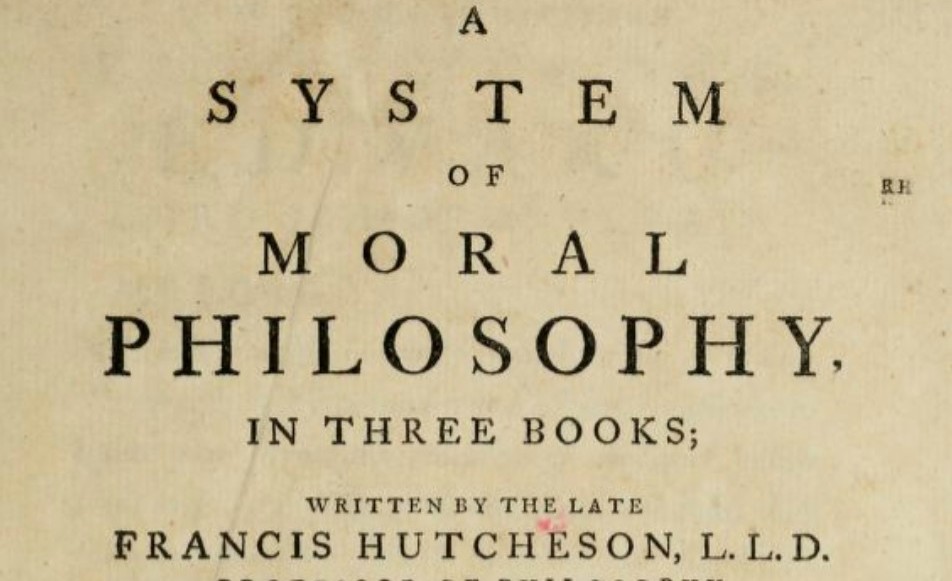
His System of Moral Philosophy (published posthumously in 1755) synthesized natural law, Christian ethics, and moral philosophy into a powerful framework. This was the primary content of Jefferson’s professor of Moral Philosophy at the College of William and Mary (and of Witherspoon at the College of New Jersey). Modern biographers try to portray Jefferson as a disciple of the Enlightenment but fail to understand that it was specifically the more Bible-based form of the Enlightenment that came from Scotland that shaped his mind.
Hutcheson’s moral philosophy is deeply rooted in Christian theology, especially in its understanding of moral law, human purpose, and virtue, as outlined below.
1. Moral Law Originates in God
Hutcheson teaches that moral obligation ultimately rests on the will and nature of God.
He argues:
God created humans with moral faculties.
Moral law reflects God’s benevolent character.
Virtue consists in conformity to God’s moral order.
This reflects biblical teaching such as:
Psalm 19:7 — “The law of the Lord is perfect.”
Romans 2:15 — the law written on the heart.
Micah 6:8 — God requires justice, mercy, and humility.
For Hutcheson, morality is not arbitrary—it is grounded in divine design.
2. The Moral Sense as Part of God’s Design
Hutcheson is famous for teaching that humans possess a “moral sense”—an innate faculty that perceives right and wrong.
He argues:
Humans naturally approve benevolence.
Humans naturally disapprove cruelty and injustice.
This moral sense was implanted by God.
This parallels:
Romans 2:14–15 (conscience bearing witness)
The biblical doctrine that humans are created in God’s image (Genesis 1:26–27)
This moral sense makes moral knowledge universally accessible.
3. Benevolence as the Highest Virtue
Hutcheson argues that benevolence—the desire for the good of others—is the highest moral virtue.
This strongly reflects:
The Great Commandment (Matthew 22:37–40)
Love of neighbor as the fulfillment of the law (Romans 13:10)
Christ’s ethic of charity and self-sacrifice
He teaches that true virtue consists in promoting the happiness of others, reflecting Christian ethical teaching.
4. Natural Equality of All Persons
Hutcheson insists:
All persons are naturally equal.
No person has inherent authority over another.
Political authority must be justified by the public good.
This reflects:
Genesis 1:26–27 (equal creation in God’s image)
The biblical rejection of arbitrary domination
This principle became foundational to revolutionary political thought.
5. The Right of Resistance to Tyranny
Hutcheson explicitly teaches that when rulers violate the public good:
Their authority becomes illegitimate.
The people have the right to resist.
He writes that government exists for the happiness of the governed—not for rulers themselves.
This reflects:
Biblical resistance traditions (e.g., Exodus narrative)
Protestant resistance theory (as in Rutherford’s Lex, Rex)
The biblical principle that rulers are accountable to moral law
6. Happiness as the Purpose of Moral and Political Order
Hutcheson teaches that God designed human beings for happiness and flourishing.
He famously articulated the principle:
The greatest happiness for the greatest number.
This reflects:
God’s benevolent purposes in creation
Biblical teaching that moral law promotes human flourishing (Deuteronomy 30:19–20)
This phrase would profoundly influence American revolutionary language.
Influence on the Declaration of Independence
The Declaration of Independence reflects Hutcheson’s core principles:
Natural equality “All men are created equal”
Natural rights “Endowed with unalienable rights”
Government for happiness “Pursuit of Happiness”
Consent of the governed “Governments… deriving their powers from the consent
of the governed”
Right of resistance “Right of the people to alter or abolish”
Hutcheson provided for Jefferson and other Founders:
A Christian moral justification for liberty.
A philosophical defense of equality.
A moral framework for resistance to tyranny.
The language of happiness that appears in the Declaration.
He helped Americans see the Revolution not merely as political rebellion—but as a morally justified defense of natural rights grounded in divine moral law.
[For paid subscribers we add below a curated list of quotes from Hutcheson’s System of Moral Philosophy.]
The content below was originally paywalled.
A System of Moral Philosophy
By Francis Hutcheson (published 1755, posthumous)
Hutcheson’s System is a major statement of the Scottish Enlightenment’s moral-sense theory. It deeply influenced American clergy, educators (including at Princeton and elsewhere), and revolutionary-era political thought through its doctrines of natural rights, benevolence, resistance, and happiness.
Below is an extensive curated list of representative quotations (standard English editions; wording may vary slightly by printing). Citations are given by Book and Section where possible.
I. On Moral Good and the Moral Sense
“That action is best which procures the greatest happiness for the greatest numbers.” (Book I)
“The moral faculty… determines us to approve or condemn actions, independently of all views of private advantage.”
“There is in human nature a determination to be pleased with the happiness of others.”
“We are determined by nature to approve benevolence.”
“The sense of virtue is not founded on self-love.”
“Virtue is an affection toward the happiness of others.”
“That which is done from kind affection is alone truly virtuous.”
II. On Benevolence
“Universal benevolence is the highest perfection of our nature.”
“The happiness of others is the ultimate end of all virtuous action.”
“No conduct can be of moral excellence which does not flow from benevolent affections.”
“The desire of the good of others is not derived from views of interest.”
“The Author of nature has implanted in us kind affections.”
III. On Happiness
“The ultimate end of man is happiness.”
“The happiness of each individual is interwoven with that of the system.”
“Private happiness is inseparable from virtue.”
“There is a necessary connexion between virtue and happiness.”
“Public good is the end of civil government.”
IV. On Natural Law
“The law of nature is that rule of conduct which right reason and our moral faculty discover to us.”
“The will of God is the supreme rule of moral obligation.”
“God has so constituted our nature that virtue tends to the public good.”
“The rights of mankind are founded in the will of God and the constitution of our nature.”
“No human authority can annul the rights which God has given.”
V. On Natural Rights
“Every rational creature has a right to pursue his own happiness.”
“Men are by nature equal.”
“No man has by nature authority over another.”
“The right to liberty is antecedent to all civil laws.”
“Property is founded in natural right.”
“The right of resistance is founded on the same natural principles as the right of self-defense.”
VI. On Civil Society and Government
“Civil government is instituted for the common good.”
“The end of civil power is the safety and happiness of the people.”
“All civil authority is derived from the consent of the people.”
“Magistrates are trustees for the people.”
“When governors act contrary to the public good, they forfeit their authority.”
“Tyranny is an abuse of power.”
VII. On Resistance and Tyranny
“The people have a right to resist oppression.”
“When the fundamental conditions of government are violated, allegiance ceases.”
“The safety of the people is the supreme law.”
“Submission is due only so far as governors promote the public good.”
“Resistance to unjust power may be not only lawful but a duty.”
VIII. On Justice and Rights
“Justice consists in abstaining from what is another’s.”
“Perfect rights are those to which others are under a strict obligation.”
“Imperfect rights are such as cannot be enforced by human laws.”
“The violation of rights destroys the foundation of society.”
IX. On Property
“The earth was originally common to all.”
“Occupancy and labor give rise to property.”
“Property is established for the benefit of mankind.”
“No accumulation of property justifies oppression.”
X. On Law and Punishment
“Punishment is just only as it tends to the public good.”
“The design of punishment is prevention.”
“Cruel punishments are inconsistent with benevolence.”
“The measure of penalties should be proportioned to the public interest.”
XI. On Liberty
“Civil liberty is the secure enjoyment of our rights under just laws.”
“Liberty is not license.”
“Freedom consists in acting according to reason.”
“The restraint of liberty is justified only for the common safety.”
XII. On Religion and Morality
“The love of God is inseparable from the love of mankind.”
“True religion strengthens benevolence.”
“Christianity confirms the dictates of the moral sense.”
“The gospel enforces universal charity.”
“The law of Christ is the law of love.”
XIII. On Conscience
“Conscience is the judge of our actions.”
“No external authority can force conviction.”
“The rights of conscience are sacred.”
XIV. On Education and Virtue
“Education should form the benevolent affections.”
“Virtue is improved by habit.”
“Public happiness depends upon the cultivation of virtue.”
XV. On Universal Society
“All mankind form one great system.”
“The good of the whole is the supreme end.”
“Nations are bound by the same moral laws as individuals.”