How a spiritual revival prepared our Founding Fathers

A wonderful movie comes this week to theaters nationwide that is important during this 250th anniversary year. A Great Awakening is a well done, but more importantly, it brings so much of our nation’s Christian history alive with extensive quotations by our Founders. I had the privilege to see an early showing, and I highly recommend it.
In our last blog we spoke of a proclamation for a Day of Fasting and Prayer issued by the Continental Congress exactly 250 years ago that was observed on May 17. It was only one of many.
The Founder’s Church Strategy
At the bottom of some of the broadsides of the Declaration of Independence used to spread the word of the revolution through the colonies, was an important addendum that can be seen today on some copies. It ordered that copies be: “….sent to the Ministers of each parish….and that they severally be required to read the same to their respective Congregations, as soon as Divine service is ended, in that afternoon, on the first Lord’s Day after they shall have received it….” [See image below]

Then it would be given to the local governments to publish. Strategically, our Founders knew the churches came first. The Biblical ideology of rights and resistance (much of which we have documented in earlier blogs) was already preached in those places consistently. This was a Christian revolution first and foremost.
In April and May of 1776, committees were formed to discuss the topics, prayer meetings were held, militia groups were formed to prepare for their defense. Often the deacons of the churches were the captains organizing drills of the Minutemen.
Revival and Revolution
The Great Awakening was a spiritual revival that began in the 1730s. The young evangelist George Whitefield came from England to travel throughout the colonies preaching salvation. It changed the hearts of the masses, but it led to new revivalist colleges such as what is known as Princeton today. It produced a clergy that knew how to address the current affairs of the day with a solod Biblical worldview, but also with fire and passion.
The movie about the Awakening does well to show the impact of revival preaching. And it also shows how the prevalence of religion at the time in society even impacted those who were not known for their faith – such as Benjamin Franklin. In the end, he advocates for prayer in the Constitutional Convention.
Some people are not aware that especially in the south and western frontiers of the colonies, the Awakening was still spreading with fervor well into the 1780s, even it had subsided in the north and major eastern cities. Frontier areas such as Orange and Albemarle counties in Virginia, where James Madison and Thomas Jefferson lived, were still having revival.
This induced Madison to attend Princeton. It induced Jefferson to start a new independent congregation called the Calvinistical Reformed Church of Charlottesville (just six months after drafting the Declaration of Independence) with one of the rare Anglican revivalist leaders of Virginia as its pastor (with Jefferson as the main donor).
Clergy in Government
One of the members of the Continental Congress was a pastor – Rev. Dr. John Witherspoon of Princeton. Below is a sermon titled The Dominion of Providence Over the Passions of Men. Witherspoon preached it on that Fasting and Prayer Day proclaimed by Congress in May 1776. Modern commentators read the Declaration of Independence today and think our Founders were secular; not strongly religious. They do not see the name of Jesus, but rather see titles such as “Divine Providence.” But this was a common term by the clergy of the day, as is evident in the following sermon by this Presbyterian pastor.
He concludes his sermon below with the following: “Make a wise improvement of the present threatening aspect of public affairs. Your duty to God, to your country, to your families, and to yourselves is the same….God grant that in America true religion and civil liberty may be inseparable, and that the unjust attempts to destroy the one may in the issue tend to the support and establishment of both.”
Our Founders, shaped by revival, then shaped the nation by bringing their faith into the process. It did not produce “Christian Nationalism” (at least as modern pundits describe), but it did establish a nation on Biblical ideas that provided liberty for all.
[For paid subscribers I have provided an edited version of Witherspoon’s sermon.]
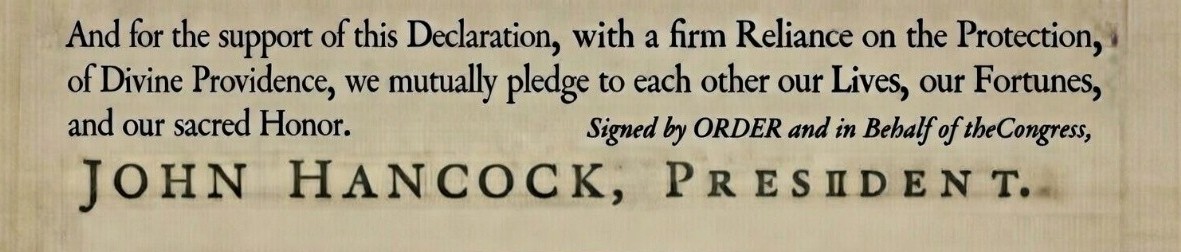
Save the date! On August 2 this year, I and many of my colleagues, are calling on Americans across the country to gather in their homes and churches and groups to connect by zoom for a special event. It was on August 2 in 1776 that the Declaration of Independence was actually signed by Founders. They agreed to it on July 4, but did not sign and pledge their “lives, fortunes and sacred honor” until August 2. National scholars and spokesmen will give remarks this coming year and invite modern patriots to make their own pledge and sign a facsimile of the Declaration. Although not yet live, soon you can go to www.250Declaration.com to find out how to connect.
The content below was originally paywalled.
The Dominion of Providence Over the Passions of Men
Surely the Wrath of Man shall praise thee; the remainder of Wrath shalt thou restrain. Psalm LXXVI. 10.
[Please note: Due to space limitations, this is an AI edited version about two thirds the length of the original.]
There is not a greater evidence either of the reality or the power of religion, than a firm belief of God’s universal presence, and a constant attention to the influence and operation of his providence. It is by this means that the Christian may be said, in the emphatical scripture language, “to walk with God, and to endure as seeing him who is invisible.”
The doctrine of divine providence is very full and complete in the sacred oracles. It extends not only to things which we may think of great moment, but to things the most indifferent and inconsiderable; “Are not two sparrows sold for a farthing,” says our Lord, “and one of them falleth not to the ground without your heavenly Father”; nay, “the very hairs of your head are all numbered.” It reaches not only to things beneficial and salutary, or to the direction and assistance of those who are the servants of the living God; but to things seemingly most hurtful and destructive, and to persons the most refractory and disobedient. He overrules all his creatures, and all their actions. Thus we are told, that “fire, hail, snow, vapour, and stormy wind, fulfil his word,” and even the most impetuous and disorderly passions of men, that are under no restraint from themselves, are yet perfectly subject to the dominion of Jehovah. They carry his commission, obey his orders, are limited and restrained by his authority, and conspire in promoting his glory. There is great need to observe this, because men often fail to distinguish between the law of God and his purpose. They suppose that as the temper of the sinner is contrary to the one, so the outrages of the sinner are able to defeat the other. Nothing can be more false. The truth is plainly asserted, and nobly expressed by the psalmist: “Surely the wrath of man shall praise thee; the remainder of wrath shalt thou restrain.”
This psalm was evidently composed as a song of praise for some signal victory obtained, which was at the same time a remarkable deliverance from threatening danger. The occasion was probably the unsuccessful assault of Jerusalem by the army of Sennacherib king of Assyria, in the days of Hezekiah. Great was the insolence and boasting of his generals against the city of the living God. Yet it pleased God to destroy their enemies by his own immediate interposition. Therefore the Psalmist says, “The stout-hearted are spoiled, they have slept their sleep… At thy rebuke, O God of Jacob! both the chariot and the horse are cast into a deep sleep.” After a few more remarks to the same purpose, he draws the inference in the text: the fury and injustice of oppressors shall bring in a tribute of praise to thee; the influence of thy righteous providence shall be clearly discerned; thou shalt set the bounds which the boldest cannot pass.
I am sensible that the time and occasion of this psalm may seem in one respect ill suited to the present circumstances of this country. It was composed after the victory was obtained, whereas we are now but putting on the harness and entering upon an important contest, the length and issue of which it is impossible to foresee. But as the truth with respect to God’s moral government is unchangeable, our duty and interest call upon us to improve it on this day of solemn humiliation. It will help us to a clear view of what should be the chief subject of our prayers and endeavors, as well as the great object of our hope and trust.
The truth asserted in the text is, That all the disorderly passions of men, whether exposing the innocent to private injury, or whether they are the arrows of divine judgment in public calamity, shall, in the end, be to the praise of God. Applied more particularly to the present state of the American colonies and the plague of war: The ambition of mistaken princes, the cunning and cruelty of oppressive and corrupt ministers, and even the inhumanity of brutal soldiers, however dreadful, shall finally promote the glory of God, and in the mean time, while the storm continues, his mercy and kindness shall appear in prescribing bounds to their rage and fury.
In discoursing on this subject, it is my intention,
I. To point out in some particulars how the wrath of man praises God.
II. To apply these principles to our present situation by inferences of truth for your instruction and comfort, and by suitable exhortations to duty in this important crisis.
First, How the wrath of man praises God. First, the wrath of man praises God as it is an example and illustration of divine truth, and clearly points out the corruption of our nature, which is the foundation of the doctrine of redemption. Nothing is more necessary to true religion than a clear conviction of the sinfulness of our nature and state. Without this there can be neither repentance in the sinner nor humility in the believer. Without this, all that is said in scripture of the wisdom and mercy of God in providing a Saviour is without force.
A more affecting view of the corruption of our nature appears in the wrath of man when exerting itself in oppression, cruelty, and blood. In times of tranquility it is manifest, but war and violence present a spectacle still more awful. How affecting it is to think that the lust of domination should be so violent and universal, that men should look upon the happiness and tranquility of others as an obstruction to their own, and should be so furiously set for the destruction of each other. Since the first murder of Abel by Cain, what havock has been made of man by man in every age. History is filled with the wars and contentions of princes and empires.
The circumstances are deeply affecting. The mother bears a child with pain and rears him with laborious attendance, yet in the prime of life he is cut down by the instruments of death. The horror is not confined to the field of slaughter; many days shall not put an end to the mourning of a parent for a beloved son, or of the widow and helpless offspring for a father.
But if this may be said of all wars, what shall we say of civil war between citizen and citizen? How deeply affecting that those of the same blood, language, and religion should butcher one another with unrelenting rage, lay waste the fields of their fellow subjects, and consume with fire the houses in which they had often found shelter.These things may kindle a spirit of revenge, which, when directed to self-defense, is necessary and laudable.
But the chief point is to impress upon our minds the depravity of our nature. “From whence come wars and fightings among you? come they not hence even from your lusts that war in your members?” Men of lax principles delight in extolling human nature without distinguishing its original state from its present fallen condition. But history and daily experience show what men are by nature while unrenewed. A cool attention to the ravages of lawless power ought to humble us in the dust, lead us to acknowledge the scripture account of our lost state, desire renewing grace, and long for the time when “men shall beat their swords into plow-shares… neither shall they learn war any more.”
Second, the wrath of man praiseth God as it is the instrument in his hand for bringing sinners to repentance and for the correction and improvement of his own children. Whatever be the affliction or the disposition of those whose malice he employs as a scourge, the design on his part is to rebuke men for iniquity, bring them to repentance, and promote their holiness and peace. “No affliction for the present seemeth to be joyous, but grievous: nevertheless, afterwards it yieldeth the peaceable fruit of righteousness unto them which are exercised thereby.” Public calamities, particularly the destroying sword, have a powerful influence in leading men to consider the presence and power of God. “When thy judgments are in the earth, the inhabitants of the world will learn righteousness.” When judgments have no effect, it is a symptom of a hopeless state. In the history of Israel, severe strokes brought them to submission: “When he slew them, then they sought him, and they returned and inquired early after God.”
Both nations and private persons are apt to grow remiss in prosperity; but when earthly comforts are endangered or withdrawn, they are compelled to look for something more durable. What can be more to the praise of God than that when a people have forgotten their resting place and abused their mercies, they should by distress be made to hearken to the rod and return to duty? Judgments are for the correction of sin or for the trial and perfecting of grace. Those who suffer most are not necessarily more criminal; our Saviour cautioned against this rash conclusion. Often those for whom God hath designs of greatest mercy are first brought to the trial. There is often a discernible mixture of sovereignty and righteousness in providential dispensations. His mercy fills the earth; he is known by the judgment which he executeth. The wrath of man fulfills his will and promotes the good of his chosen.
Third, the wrath of man praiseth God as he sets bounds to it by his providence and sometimes makes it evidently a means of promoting and illustrating his glory.
There is no part of divine providence in which greater beauty appears than when the Almighty turns the counsels of wicked men into confusion and makes them militate against themselves. Scripture abounds with instances in which the designs of oppressors were disappointed or turned to the honor of those they intended to destroy. We have such instances in the history of Sennacherib and in the book of Esther. Above all, in the death and sufferings of the Son of God: when his enemies thought their victory complete, they were but perfecting the great design of salvation. “They gathered together to do whatsoever thy hand and thy counsel determined before to be done.”In all ages, the deepest contrivances of the prince of darkness have turned to the confusion of their author. Persecution has been but as the furnace to the gold, to purge it and increase its lustre; the blood of the martyrs was the seed of Christianity. Julian the Apostate’s attempt to rebuild the temple at Jerusalem was signally frustrated. At the time of the Reformation, the violence of persecutors helped spread the gospel; those persecuted in one city fled to another and carried the light with them. The Spanish Armada was entirely discomfited by tempests. Persecution in England drove pious Christians to New England, where they planted the knowledge of Christ and maintained great purity of faith and practice. Thus the wrath of man praises God.
II. Application to our present situation.
First, I would press every hearer to a sincere concern for his own soul’s salvation. A season of public judgment is a time when the conscience may be more open to conviction. Can you have a clearer view of the sinfulness of your nature than when the rod of the oppressor is lifted up and men are collecting the weapons of hostility? I do not blame your ardor in preparing for the defense of your temporal rights, but consider the infinite importance of the salvation of your souls. Is it of much moment whether you and your children shall be rich or poor, at liberty or in bonds? Is it of less moment whether you shall be heirs of glory or heirs of hell? Attend to the things that belong to your peace before they are hid from your eyes. Now is the accepted time. Receive not the grace of God in vain. There can be no true religion till there be a discovery of your lost state and an unfeigned acceptance of Christ Jesus. There is no salvation in any other.
Second, you may see what ground there is to give praise to God for his favors already bestowed on the public cause. It would be criminal inattention not to observe the singular interposition of Providence hitherto in behalf of the American colonies. How many designs of enemies have been discovered unexpectedly and prevented? What surprising success has attended our encounters? Has not the boasted discipline of regular soldiers been turned into confusion before the courage of freemen? In what great mercy has blood been spared? The evacuation of Boston was brought about without the loss of a man. The counsels of our enemies have been visibly confounded, so that their steps have operated strongly against themselves. While we give praise to God, let us guard against trusting in an arm of flesh or boasting. Ostentation is an outrage upon Providence and a forerunner of destruction. Let us ascribe success modestly to the power of the Highest.
Third, from what has been said you may learn what encouragement you have to put your trust in God and hope for his assistance in the present conflict. He is the Lord of hosts, great in might and strong in battle. If your cause is just, your principles pure, and your conduct prudent, you need not fear opposing hosts. The cause in which America is now in arms is the cause of justice, of liberty, and of human nature. It has arisen from a deep conviction that our civil and religious liberties, and the happiness of ourselves and our posterity, depended on the issue. There is not a single instance in history in which civil liberty was lost and religious liberty preserved entire. If we yield up our temporal property, we at the same time deliver the conscience into bondage.
The management of the war on their part shows the impossibility of these growing states being safe and happy while dependent on Great Britain. Their distance and ignorance of our situation make wise administration impossible. If principles are pure—arising from concern for country rather than selfish views—and you add prudence in conduct, particularly union, firmness, and patience, there is the greatest reason to hope for prosperity and success by the blessing of God. Avoid every cause of division. Be resolute, laying your account with difficulties and occasional disappointments. “Be of good courage, and let us behave ourselves valiantly for our people and for the cities of our God, and let the Lord do that which is good in his sight.”I shall conclude with some exhortations to duty suited to the present time.
Attend to the public interest of religion—zeal for the glory of God and the good of others. A general profligacy of manners makes a people ripe for destruction, while pure manners and true religion baffle the attempts of oppressors. He is the best friend to American liberty who is most active in promoting true religion and bearing down profanity and vice. Oppose every body’s wickedness, not other sects. Let example, and when necessary open reproof, be used. Magistrates, ministers, parents, and especially officers commanding soldiers should restrain cursing and blasphemy. The cause is sacred; the champions for it ought to be holy.
I exhort all who are not called to the field to apply themselves with the utmost diligence to works of industry. Habits of industry increase wealth, prevent many vices, and are connected with sobriety and good morals. Idleness is the mother of almost every vice. Industry is a moral duty necessary to national prosperity and the sure way of obtaining the blessing of God. It also prepares men for the fatigues of a campaign.
In the last place, I recommend frugality in your families and every article of expense. This is rendered necessary by the state of things and stands connected with virtuous industry and public spirit. Temperance and moderation in dress, furniture, and equipage characterize the true patriot. If the unjust oppression of your enemies shall contribute to make you clothe yourselves with the works of your own hands and cover your tables with the productions of your own soil, it will be a real happiness to yourselves and your country.
Make a wise improvement of the present threatening aspect of public affairs. Your duty to God, to your country, to your families, and to yourselves is the same. True religion is an inward temper and outward conduct suited to your state and circumstances. In the man of piety we may expect to find the uncorrupted patriot, the useful citizen, and the invincible soldier. God grant that in America true religion and civil liberty may be inseparable, and that the unjust attempts to destroy the one may in the issue tend to the support and establishment of both.