How one of our partners used our teachings to disciple leaders
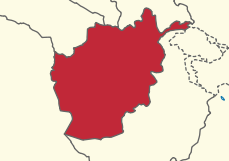
This post features a story from Afghanistan by one of our global partners from the Philippines. You can learn more of our ministry called Global Transformation Network at the website GlobalTN.org [or in the USA-Canada region which is for most of the readers of this blog at RebuildersNetwork.org. Our ministry believes that Jesus calls us to not only win souls for heaven and to plant churches, but to also “make disciples of all nations” (Mt 28). This means also seeking to transform every sphere of national life as much as possible in a fallen world. The primary method Jesus gave to do this was by “teaching them all that I have commanded.” Today in over fifty nations we have teams of leaders working together in this way and having impact at various levels. Below is just one example of activity in one of the most difficult environments.
Going into Afghanistan in 2003
A team of mostly Filipinos went to Afghanistan in 2003 (two years after the US war in Afghanistan had begun and about the same time the Iraq war began), to provide help for Kabul university after many of its former professors had been killed or abandoned their positions. The team also connected and served a lot of people, including many officials and ministers in the government. Most of the government officials were actually warlords appointed by president Muhammad Karzai.
At the time the Americans and the Western governments wanted a way to unite a broken nation. As professional educators they worked with people and ministers and talked and dialogued not only within Kabul university, but also with a lot of ministries of government helping to link a lot of stuff especially in the area of governance and running the government. But they also led a clinic there with doctors and nurses and psychologists. The team had expertise in different fields, but many of them would also volunteer to teach subjects in the university.
The head of the team was a trained architectural engineer who taught on that subject but also on political science since no one was available (or willing) to teach that subject in the university in such a turbulent time. He had learned in the 1990s about discipling nations and principles for transforming nations from the teachings and books of Mark Beliles and Stephen McDowell. He recounts his experience in his own words below. Even though the USA suddenly left and abandoned many friends in 2021, this story hopefully will give you motivation to keep praying for that nation and perhaps learn how you can also help fulfill Jesus’ command to go “make disciples of all nations” (Mt 28).
For security reasons we are not disclosing the name of our friend whose story is below.
Rebuilding Afghanistan Conference
We organized a conference called Rebuilding Afghanistan within Kabul University. The aim of that was to bring together a lot of very influential people, the who’s who, the ministers of government, the academics, not only in Kabul, but the other universities around to bring together other people who are powerful also: regional leaders, most of them military commanders or formerly Mujahideen leaders and warlords who were either sitting in government or out there leading their people; And also the respected elders of their country, the Loya Jirga.
Some of them were there attending the Rebuilding Afghanistan seminar. And we talked mostly about the things that’s needed there – medicine, healthcare, agriculture, water resource (because there’s really a great need for that in Afghanistan at that time). We talked about demining because Afghanistan had so many minefields in it. It was very dangerous. You see a lot of people, especially kids losing their limbs.
My particular part of the conference, was to teach about self-government. And that made a lot of heads either shake or, look at me, and they’re so challenged with the idea. But with regard to this new way of thinking about self-governance in the conference and the university classes, there was a particular book that I brought in: Liberating the Nations by Dr. Mark Beliles and Stephen McDowell along with its workbook Principles for the Reformation of Nations. I brought this book there and shared its principles.
I want to really thank the authors of the book. It was also our textbook that we had next to the Bible when we were teaching English as a second language in Afghanistan. [Note: This book is now updated, improved and published as National Transformation by Mark Beliles for international audiences, but in USA the same book has additional American history weaved into it under the title America’s Providential History. You can order here.]
Most Afghans would say, we’re Afghans, there are only three things about us. We’re poets, we’re farmers, and we’re warriors. I agree. But I told my class, that Afghans are also traders, merchants. And I told a story I read long ago about The Merchant of Herat. How the people of Afghanistan engaged in trade as part of that Silk Road that leads from China to Europe. Caravans would stop in Central Asia and in Kabul, because that has been one of the greatest trade routes before ships that would sail about the oceans. And so I reminded them of that. You’re business people. Don’t just think of things that are good and great and simple, but you are great as business people. And you should remember it now because you’re part of not only as one nation, you’re now a member of the family of nations. I told them, for there to be good national leadership, we have to lead ourselves first.
In Afghanistan, there’s a saying that says, “if I met you today, we become friends. Tomorrow, we are brothers.” The relationship we had in engaging the young students and leaders was even in the most trying times when, you know, our team was attacked by militants. We were thrown grenades inside our van, but it never exploded. This only created, not fear, but the trust and the faith in what we did.
And as we begin to touch lives, we teach them how to speak English using the scriptures as the textbook. Along with the other book by Beliles and McDowell that also deeply affected a lot of them. And I believe it greatly affected a batch of them. The Lord not only planted a great word, but a great work in the hearts of many of those leaders. A lot of them begin to see the world in a different light.
We taught about certain principles that you can do, no matter if you say, this is my faith or my religion, if you adapt that and be open in your heart to receive instruction, especially from the good word, things can be different. Things can be different, personally. Things can be different in your life.
And the message that if you want to lead a nation, you have to first lead yourself. The greater the self-government, the greater your freedoms will be. The greater the external government, or we say the civil government, the lesser your freedom. This is how to make a better day, a better way, to make Afghanistan one of the most, perhaps, respected countries in the families of nations.
Discipling an Influential Student
I will share one example of impact through my class at Kabul University. I will not mention the name of one student for the sake of protecting him because I know to this day he is still there. I noticed him in my class as being respected and followed by most, if not all, students within the university. In particular, when he walks, when he talks, they would listen.
And during 3 p.m. prayers, where they put their prayer mats, I see this guy kneeling down and bowing down. And when people would see him, everybody follows. I know that this student may have come from very, very powerful families within Afghanistan, so I choose not to ask more of the background. This particular guy who I know is a relative to very powerful people because during the time a lot of students within Kabul University are children or within the family sphere of very powerful commanders; Mujahideen, and even elders there in Afghanistan.
It turned out that in my class as I was teaching political Science 101, he is one of my students and I teach things that are new to them and really things that can challenge the way they believe or what they stood for. So they will really speak out. And if you’re not careful, they can take over your class. When I touched on the topic of self-government, this student really reacted strongly.
So here’s this guy trying to lead me astray from the lecture and trying to just insert what he thinks is right. So what I did was to stand my ground and I told him, I’m doing my lecture and we’re following a syllabus. If there’s any particular thing you want to say, or you put your own opinion, maybe you could just approach me after class.
But he insisted. So I stood my ground. I said, Okay, if you insist, then make sure to understand I’m your professor. And because you’re interrupting my class, the door right there is open. Can you go out and take those two guys, your friends, with you? And everybody looked at him and then back at me. And a lot of those guys were shocked that I sent that guy out along with his friends. Then the girls look at me with ashen face like, what have you done? (This was the first time Afghanistan allowed women to be in a class.)
I don’t have any idea how shocking this is to them. I prayed in my heart, Lord, I don’t care who that guy is, I have to do this. And I could see him pacing up and down outside the door, but I stood my ground. So after the class, I went out and the good thing is, he apologized! And that began a good friendship between him and his friends and me.
We talk a lot about self-government because I was telling them that the greatest form of governance or government is self-government. Why? Because if you cannot lead yourself, how can you lead others? And I did that because I was sharing the same principle of Hugo Grotius long ago. He said if you want to change a nation, you have to change its provinces. And you cannot change any particular province if you’re not able to move or touch or change a town or its cities. And you can’t even do that if you do not change the lives of those in the villages. And no village will change unless families change. And no family will ever change unless the individual changes for the better.
And that made him think a lot because You know, this is Asia and Afghanistan is a particular place in Asia where people just follow without even trying to think, even though their heart may be against it, they just follow. And I encourage them. It’s not just about individuality. It’s understanding that no matter where you are, whatever faith you have, if you cannot lead your life, you have no business leading others.
And because of that day, it changed him and it changed me the way I was able to deal with people and we become teacher and friend and he begins to listen, exchange ideas. And I know that this guy is not just influential, he’s smart, and there’s so much in his heart about this country. And so meeting him is something I can still recall to this day that was really God ordained because he’s a leader, a student leader. Everybody respected, obeyed.
We have a time talking together every day or every other day. We meet and discuss so much about his country, his love for it, how he grew up. And I also shared to him about my country, the Philippines. How we were also under the powers of foreigners for many years. We took advantage of what good it had and threw out what’s not needed. And so begins a good friendship between him and me. So little by little, I was sharing to him not only the principle of self-government, but the Bible itself, and in a way discipling in a subtle way.
Hope for Afghanistan After Twenty Years
Now, after 20 years, the U. S. left Afghanistan, maybe we can say in a haste. This harmed many people who we had worked with, but nonetheless, the Taliban leaders now are not the same Taliban leaders we had long ago. They might still have the same violence and all, but most of them were students long ago when we were there 20 plus years ago.
For example, the young man I discipled was actually a nephew of the great Taliban founder and leader, Mullah Omar. I believe in his heart, he learned principles, not only about nation building, but foremost about himself, that could lead not only to a better nation, but a better life, a better self, a better faith in what the future holds.
And when you look at the leaders now in Afghanistan, they’re more learned than the first batch, their elders. And a lot of them in the political science classes at their top university in Kabul were imparted the principles of the Word of God. Some of this batch of leaders who are now in leadership at various levels, were there 21 years ago, learning in the classrooms with us. They really took in what was planted in them.
I hope this also brings encouragement to your heart about the power of ideas and a long-term strategy for discipling nations. Especially powerful is the message of self-government – of leading yourself under God so you can lead others, and change your nation. [This is the end of the Filipino testimony.]
How To Disciple Nations (final comments by Mark Beliles)
We do not believe politics alone can transform a nation. And neither can American culture change nations. We do not want to spread American ideas, but Biblical ideas of transformation. America used to be more in line with Biblical principles and that is why God blessed the nation, but now it is has largely abandoned those foundations.
In the story above, Americans came with military force and some other good cultural services, but Filipino Christians were uniquely effective because they came with ideas to which the young leaders of Afghanistan were more open to hear. The American military has now left but people are still there representing the Kingdom of God working on transformation that already is having some impact, but may take generations before major shifts happen.
Christians have to have a long-term comprehensive 7-sphere strategy to change the thinking and practices in the spiritual, intellectual, political, commercial and social areas of a nation. This is what we train leaders how to do all over the world.
The Global Transformation Network has an accredited online school called the Institute for Building Great Nations and there is a special Leadership Program for Transforming Nations with five levels of training that starts with worldview Principles, then best Practices, then how to build effective Partnerships, then long-term strategic Planning, and lastly execution of Projects. Our global experts provide educational lectures at first, but then practical coaching, and consulting at the advanced levels. Usually each of the five levels costs $500, and you can do it individually at your own pace using the recorded videos of lectures by professors. But we are offering a special concentrated live course of level one Principles led by Mark Beliles, Dennis Peacocke and others just for leaders in USA and Canada at an extremely reduced one-time rate. If you are interested, please inquire by emailing me here. After enough contact us, we will arrange the most suitable schedule that works.
[For our paid subscribers below is an excerpt that the Filipino partner used to teach about Self-Government from our original Liberating the Nations book below, but which is no longer in print.]
The content below was originally paywalled.
The Fundamental Principles of Christian Nations
The world is changing rapidly today. Nations are crying out for freedom and are looking for ways to bring prosperity to their lands. While we have witnessed the fall of communism, and see the possibility for continued positive change to take place in the world, the potential for national upheavals is also great. Most nations are facing tremendous problems. Individuals, families, businesses, and nations are crumbling or on the verge of crumbling. Pressures are mounting on every aspect of society today.
How are we to hold up under such pressures? Where are we to look for answers to the many problems and difficult situations we face? The Bible provides the answers the world seeks. The truth contained in the Bible provides mankind with principles of liberty that brings real freedom to those individuals and nations who are oppressed (John 8:32). The Bible teaches and history confirms that to the degree that a nation applies the principles of the Word of God to all aspects of the society is the degree to which that nation obtains freedom and prosperity.
The principles contained in the Bible encompass all of life. This includes divine matters between man and God, but also social and civil matters. Just as the Truth will set men free as they act upon it, so shall it also set nations free that abide by it. Jesus instructed His disciples to take the Gospel message to all the nations. While much of the church in recent generations has limited the message of the gospel to personal matters, the Bible reveals the Gospel message encompasses all of life.
A Nation’s Foundation Must Be Strong to Hold Up Under Pressure
For a nation or society to stand under pressure it must have a strong foundation. This means that each component of society must have a strong foundation. Francis Schaeffer stated that an individual, family, church, association, or government “with a weak base can stand only when the pressure on it is not too great.” He gave the illustration of relating a person and culture to a Roman bridge:
The Romans built little humpbacked bridges over many of the streams of Europe. People and wagons went over these structures safely for centuries, for two millennia. But if people today drove heavily loaded trucks over these bridges, they would break. It is this way with lives and value systems of individuals and cultures when they have nothing stronger to build on than their own limitedness, their own finite[1]ness. They can stand when pressures are not too great, but when pressures mount, if then they do not have a sufficient base, they crash — just as a Roman bridge would cave in under the weight of a modern six-wheeled truck. Culture and the freedoms of people are fragile. Without a sufficient base, when such pressures come only time is needed — and often not a great deal of time — before there is a collapse.
The pressures that people and nations face today are so great that they will quickly collapse unless they are supported with a solid foundation. That foundation is composed of principles found in the Bible that support a free, just, prosperous, and long-lasting nation.
As we work to bring reformation to the nations, we must remember that change begins internally. Nations seeking to shift from communistic economic systems to a free market (or from state control to more self-government) must recognize that they will never accomplish their goals unless the people have the proper foundation in character and thought.
It is not enough to set up external structures, even if they have worked in other nations and have been part of the best and most free governments in history. We must remember that good structures are not enough because the best government in ill hands can do nothing great or good.
The following foundations in individuals, families, churches, associations, and governments will provide a strong base allowing each component of society, and hence society itself, to stand up under any pressure. These principles must be part of the lives of the people of any nation desiring freedom and prosperity, for after all, it is men who cause governments to run. Governments depend upon men more than men depend upon governments. If men are good, the government cannot be bad.
These principles form the basis of a “Christian” nation. When we talk of building Christian nations we mean building nations whose foundational principles are Biblical. If they are, then the principles will be manifested in the nation’s law base and in the societal institutions.
As we examine the following foundations, most of the application is in the civil realm. We could just as easily apply them to families, individual lives, businesses, and the church.
1. Self-Government
When people hear the word government they usually think of civil government for in most nations that is the government.
In a general sense government means direction, regulation, control, restraint. There are many spheres of government each providing direction, regulation, control, and restraint in its jurisdiction. The spheres of government can be divided into internal and external government. Another name for internal government is self-government. All government begins internally in the heart of man, with his ability to govern his conscience, will, character, thoughts, ideas, motives, conviction, attitudes, and desires. How a man governs himself internally affects his external actions, speech, conduct, use of property, etc. Each external sphere of government is a reflection of the internal sphere. In other words, the internal is causative to the external. The type of government that exists in the homes, churches, schools, businesses, associations, or civil realms of a country is a reflection of the self-government within the citizens.
The seventeenth century Dutch scholar, Hugo Grotius, who systematized the subject of the Law of Nations, summarized the principle of self-government in the following quote:
He knows not how to rule a kingdom, that cannot manage a Province; nor can he wield a Province, that cannot order a City; nor he order a City, that knows not how to regulate a Village; nor he a Village, that cannot guide a Family; nor can that man Govern well a Family that knows not how to Govern himself; neither can any Govern himself unless his reason be Lord, Will and Appetite her Vassals; nor can Reason rule unless herself be ruled by God, and (wholly) be obedient to Him.
Stated another way, you must rule yourself before you can rule others. The Bible teaches that rulers must be self-governed. One quality of a church leader was that he “manages his own household well, keeping his children under control with all dignity (but if a man does not know how to manage his own household, how will he take care of the church of God?)” (1 Timothy 3:4-5).
There are many civil government leaders today who are attempting to govern their nation, yet are unable to effectively direct and control their own lives or their families. These men and women should be replaced by those who can rule their own lives. Those who are self-governed are the ones with real power according to the Bible: “He who is slow to anger is better than the mighty, and he who rules his spirit, than he who captures a city” (Proverbs 16:32).
Grotius’ statement reveals how the flow of power should occur within a country, from the internal to the external. He speaks of decentralized governmental units wielding less power the further removed they are from the individual.
Effective government begins by an individual learning to govern himself. The more internal self-government a person possesses, the less external government he needs. Consequently, the more rules and laws required to keep people acting rightly is a revelation of a diminishing amount of self-government. History teaches that man can control himself, but only to a limited degree. Since self-government cannot be imposed externally, and man is limited in personal self-discipline, there needs to be another source for internal control. Grotius reveals that man can only be truly self-governed if his reason, will, and appetite are ruled by God. The basis of self-control is obedience to the Creator and His standards of conduct found in the Bible.
The fourth President of the United States and chief architect of the U.S. Constitution, James Madison, stated:
We have staked the whole future of American civilization, not upon the power of government, far from it. We have staked the future of all our political institutions upon the capacity of mankind for self-government; upon the capacity of each and all of us to govern ourselves, to control ourselves, to sustain ourselves according to the Ten Commandments of God.
As people in a nation become less self-governed, and give up power, the civil government (especially the national government) will grow and grow, making more and more laws (many outside its realm of jurisdiction) and spending more and more money. Lack of self-government leads to greater centralized external government which results in loss of individual liberty.