A 17th Century History and Commentary of New England
[Our primary focus in the coming months is on the influences and events that led to and shaped the birth of the United States as an independent nation in 1776. In previous blogs we examined some of the political and legal reasoning that occurred back in Europe in the 1600s and below we list a few documents in the American colonies in the first third of the 1700s.]
In the first third of the 18th century, Europe continued to experience various wars, Russia began to pivot toward Europe under Peter the Great, the English and Scots agreed to a combined government called Great Britain and (in effect) its first prime minister emerged in government.
Meanwhile among the British colonies in America, various developments of government and literature took place. The colony of Pennsylvania developed its documents concerning liberties and Georgia its first charter (both of these quoted in previous post). The royal government officially permitted the division of the Carolina colony into north and south Carolina in 1729. Thus the complete 13 original colonies were in place that would unite for independence over 40 years later.
Below are a list of key writings in early 18th century America, most with Christian language and ideas:
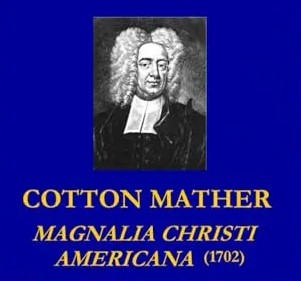
Magnalia Christi Americana, by Cotton Mather (1702)
Robert Beverley on Bacon’s Rebellion (1704)
Money and Trade Considered With a Proposal for Supplying Nation with Money, John Law (1705)
Slave Laws in Virginia (1642-1705)
The Repentance of a Salem Witchcraft Accuser, Ann Putnam (1706)
Act of Union (1707) The document creating “Great Britain”
Philosophical Commentary, Pierre Bayle (1708);
William Byrd’s Diary [excerpt] (1709)
Theopolis Americana (“God’s City: America”), Cotton Mather (1709).
Awakening Truths Tending to Conversion, Increase Mather (1710).
About the Duties of Husbands and Wives, Benjamin Wadsworth (1712)
Curriculum of the Boston Latin Grammar School (1712)
The History of the Common Law of England, Matthew Hale (1713)
Documents Concerning the Jacobite Rebellion
The North Carolina Biennal Act (1715)
Vindication of the Government of New England Churches, John Wise (1717)
The Angel of Bethesda, Cotton Mather. in favor of inoculation.
Selections from Cato’s Letters, John Trenchard and Thomas Gordon (1720-23)
Statutes of the College of William and Mary (1727)
Massachusetts House of Representatives on the Governor’s Salary, 11 September 1728
Governor Burnet of Massachusetts on the Governor’s Salary, 17 September 1728
The Story of Venture Smith (1729-1809)
Plain Reasons for Presbyterians Dissenting, Andrew Clarkson (1731)
Dissertation Upon Parties, Henry St. John Bolingbroke (1733).
Founding Vision for Georgia, General James Oglethorpe (1733)
Negotiations Regarding the Settlement of the Georgia Colony, Count Zinzendorf (1733)
At the beginning of that list above was a book that summarized the Christian history of the entire previous century in New England.
Cotton Mather’s Magnalia Christi Americana (1702) is an extensive history of 17th-century New England, structured into seven “books” (sections) each devoted to a particular theme or aspect of the Puritan colonial experience. Throughout this work, Mather portrays the settlement and growth of New England as the unfolding of divine Providence. In his opening lines he vows to “write the Wonders of the Christian Religion” in America, celebrating “the Wonderful Displays of [God’s] Infinite Power… and Faithfulness, wherewith His Divine Providence hath irradiated an Indian Wilderness”. The narrative is thus imbued with a sacred purpose: to record how Christ’s great works (magnalia Christi) were manifest in New England’s founding, leaders, clergy, institutions, and trials.
Section One
The first major section consists of seven chapters as a general foundational narrative – a chronicle of the Origins of New England’s “antiquities,” recounting the earliest events and conditions of the colonies. Mather traces the period from the first exploratory efforts through the founding of the Plymouth and Massachusetts Bay colonies and related settlements. The seven chapters proceed roughly chronologically.
Mather introduces the providential “design” behind New England’s discovery and settlement, showing how God prepared the way for a godly colony, preserving the land for the coming of the Pilgrims at Plymouth (1620), marking the formal “first planting” of New England. The theological theme is the covenant: the Pilgrims saw themselves in covenant with God, and Mather accords Governor Bradford and others the status of latter-day Israelites upheld by divine providence.
Mather then turns to the founding of the Massachusetts Bay Colony (1630) and the great Puritan migration. Winthrop’s famous vision of a “City upon a Hill” and other key documents show the settlers’ spiritual aspirations. He then narrates the establishment of Boston and surrounding towns. John Winthrop is portrayed in glowing terms as a model Christian magistrate with laudatory anecdotes about Winthrop’s humility and piety, reinforcing the idea that the civil leaders were instruments of God in New England.
The focus then shifts to the founding of other New England colonies, especially the origin of Connecticut. Mather recounts how Rev. Thomas Hooker led a group of settlers from Massachusetts to found Hartford in 1636, driven by the search for liberty of conscience and a proper church order. It tells of the Fundamental Orders of Connecticut (1639) as another example of godly governance. The settlement of the New Haven Colony under John Davenport and Theophilus Eaton is also included.
He highlights the formation of the New England Confederation (1643) – the first cooperative union of the colonies (Massachusetts, Plymouth, Connecticut, New Haven) for mutual defense – which helps them to win a war with the Pequot tribe (1637) due to God’s intervention, not human might. Internal challenges in the 1640s, due to the rise of dissenting voices (for example, Roger Williams in Rhode Island) are described by Mather as a “thorn” or “rod” used by God to test the colony’s firmness. Mather views Williams’s advocacy of radical separatism and his founding of Rhode Island as a challenge to the true church.
Also discussed is the impact of the Restoration era (1660s) and King Charles II’s threats to New England’s autonomy, as well as King Philip’s War (1675–1676) with the Wampanoag and other tribes. He also tells of the ecclesiastical developments of the Half-Way Covenant (1662) and the growing problem of a less zealous second generation and a perceived decline in piety as the founding generation passed. Mather cites ominous signs (droughts, comets, Indian wars) as warnings from God to a backsliding people. The aftermath of the 1691 new charter (when Massachusetts became a royal province) is seen as a chastisement for the colony’s sins.
Mather venerates the founding fathers and first generation one last time, urging his contemporaries to remember their “first love” and high ideals. An appendix to this first section is a special celebratory piece often referred to as The Bostonian Ebenezer that gives a full description and history of the town of Boston – the capital of the Puritan colony (the “Ebenezer” reference comes from 1 Samuel 7:12, “Hitherto hath the Lord helped us”). This appendix, in effect, sums up Book I’s theme: it is a thanksgiving for New England’s sacred history thus far, attributing all glory to Christ’s providential care.
Section Two
The second major section consists of thirteen chapters that provides biographical accounts of New England’s civil leaders, whom Mather saw as “shields of the churches.” Unlike a church history (especially more modern ones) that focuses mostly on church leaders, church growth and spiritual awakenings, Mather’s history reflects the way Christians in early America viewed civil rulers as equally important to having a Christian nation. Mather presents the lives of the principal governors and magistrates of the colonies, from the founding through the 1690s, demonstrating how their leadership upheld the Christian commonwealth, often comparing these leaders to biblical figures, aiming to edify readers with examples of piety in high office. Mather praises their administration as exemplifying Christian statesmanship reinforcing that the success of the Puritan enterprise was a collective effort of many God-fearing leaders.
A list is below:
John Carver – the first governor of Plymouth (elected on the Mayflower).
William Bradford – Governor who succeeded Carver and governed Plymouth for many years. Bradford is cast as the patriarch of New England, a man of “extraordinary piety and prudence.” Mather emphasizes Bradford’s practice of seeking divine guidance in every decision, illustrating the ideal of a Christian magistrate.
John Winthrop – the first Governor of the Massachusetts Bay Colony. He is described as “the American Nehemiah.” Winthrop’s peacemaking character and his submission to God’s will (like when Winthrop peacefully ceded office to rival Thomas Dudley when voted out, are highlighted.
Thomas Dudley – Winthrop’s frequent deputy and sometime rival, co-founder of Cambridge (Newtowne), who served multiple terms as governor in the 1630s and 16400s. Mather’s theme is that even differing temperaments were used by God: Winthrop’s mercy and Dudley’s justice together kept Massachusetts on a righteous path.
John Endecott – an early leader in Salem (arriving in 1628); a longtime Massachusetts governor (in the 1640s–60s). Notoriously zealous, he once cut the red cross out of the English flag as a protest against “popish” symbols. He enforced laws against the Quakers vigorously, even overseeing the execution of Quaker missionaries in the 1660s. Mather compares him to biblical figures like Phinehas or Jehu – men zealous for God’s honor.
Sir Henry Vane and Richard Bellingham – Governors whose mistakes are noted with moral lessons (Vane: brilliance needs true piety; Bellingham: steadfastness and the dangers of pride).
Simon Bradstreet – governor in the 1670s and 1680s, spanning the turbulent times of King Philip’s War and loss of the Massachusetts charter. He resisted Sir Edmund Andros’s regime. Bradstreet is portrayed as a deliverer figure, used by God to restore just government.
Edward Winslow, Josiah Winslow (his son), and Thomas Prence were later Plymouth governors.
Governors of Connecticut and others:
John Haynes – a founding governor of Connecticut, serving multiple terms in the 1640s, and co-author of the Fundamental Orders.
Edward Hopkins – governor (served in 1640s) and a close colleague of Haynes.
John Winthrop Jr. – founded New London and served as Connecticut’s governor for many years (1657 and 1659–1676). He obtained the Connecticut Charter of 1662 from King Charles II.
Theophilus Eaton – Governor of New Haven, his piety and strict biblicism of their legal code
William Coddington – Governor of Rhode Island, founder of Newport
Massachusetts governors toward the end of the century:
Joseph Dudley – briefly as president of New England (1686) and later as a royal governor (1702)
Sir Edmund Andros –an Anglican Royal governor imposed by King James II, who ruled autocratically over a merged Dominion of New England. Mather describes it as an affliction allowed by God to chastise New England until April 1689, when news of the Glorious Revolution sparked the uprising that overthrew Andros – with Rev. Increase Mather’s diplomacy in England playing a role in restoring the colony’s rights.
Sir William Phips – Governor who halted the Salem witch trials who worked closely with the Mathers in reforming the colony post-Andros.
William Stoughton – Governor known earlier for being the chief judge during the Salem Witch Trials of 1692. Mather commends Stoughton’s zeal against evil but regretting that “some mistakes were made” in the process.
Section Three
The third major section consists of many chapters devoted to biographical sketches of about sixty ministers and elders of New England’s churches. Although the reader today should learn of these men, we will not give space here except to list their names below:
It starts with Early New England “Apostles” or spiritual founders of Massachusetts such as Rev. John Wilson, Rev. John Cotton, Rev. Thomas Hooker, Rev. Thomas Shepard. It then covers the Defenders and Martyrs of Orthodoxy: Rev. John Norton, Rev. Peter Bulkeley, Rev. John Davenport, Rev. Michael Wigglesworth, Rev. John Eliot, Rev. John Warham, Rev. Henry Whitefield, Rev. Ralph Smith, Rev. John Wheelwright, Rev. James Matthews, Rev. Marmaduke Matthews. The second generation included Rev. Increase Mather, Rev. Samuel Willard, Rev. James Allen, Rev. Urian Oakes, Rev. Samuel Hooker, Rev. Eleazar Mather. In Connecticut, he features Rev. Thomas Shepard Jr. and Rev. Solomon Stoddard. In Plymouth and the islands, Mather may mention Rev. Richard Bourne or Rev. Samuel Treat.
But Mather does not limit himself to head pastors; he also honors various types of church officers and Christian scholars: Elder Thomas Leverett, Elder William Brewster, Rev. John Eliot Jr., Rev. Joseph Eliot, Rev. Samuel Danforth, Rev. William Hubbard, Rev. Cotton and Rev. Benjamin Woodbridge. Mather takes note of the Cambridge and Oxford alumni who came over, such as Rev. Nathaniel Ward, Rev. John Harvard. He tells of Piety and Providences in Ministers’ Lives with stories of Rev. Abraham Pierson, Rev. William Thompson, Rev. John Bailey, Rev. Samuel Torrey, Rev. Nehemiah Hobart, Rev. Jonathan Mitchel, Rev. John Williams, Rev. Samuel Treat, Rev. Thomas Thacher, Rev. Leonard Hoar, Rev. Stephen Williams, Rev. John Miller.
Mather closes with a broad statement that “Thus we have seen the stars which Christ held in His right hand, who shone over the infancy of these churches; though many have set, their light remains.” This sentiment reinforces Mather’s central theological theme in section three: the legacy of these godly ministers is the true treasure of New England, far more than any material wealth.
Section Four
The fourth major section consists of chapters focusing on Harvard College and the educational establishment of New England’s ministry. The theological theme is that godly learning is a handmaid to the Gospel – Mather staunchly defends the idea that true religion and sound education go together.
Mather’s main points are: (1) Education was crucial to New England’s church project – from the start, the Puritans established a college to ensure an educated ministry; (2) Harvard had a providential trajectory – it endured trials but was sustained by God through benefactors and dedicated scholars; (3) The graduates of Harvard (and a few who studied at other universities abroad) provided the intellectual and spiritual leadership that preserved New England’s identity.
He introduces Rev. John Harvard, the young minister whose bequest (his library and half his estate) in 1638 allowed the fledgling college to survive; in tribute, the college was named after him. The first Headmaster (or “President”) was Nathaniel Eaton, and the true first enduring President was Henry Dunster (1640–1654). However, Dunster himself became a trial for the college when he embraced Baptist views (rejecting infant baptism) and had to resign in 1654.
The laws and customs of Harvard are outlined. Mather quotes from the “Rules and Precepts” of 1646, which required students to be “plainly instructed that the main end of their life and studies is to know God and Jesus Christ” – showing the fusion of education and piety. He details how students studied Latin, Greek, Hebrew, logic, physics, ethics, and divinity. He notes the requirement of daily prayers and scripture reading, the strict moral discipline (e.g., fines for misbehavior, mandatory attendance at worship). He also mentions Harvard’s sibling institution, the newly founded Collegiate School in Connecticut (1701) (This would become Yale College, though not yet named in 1702.)
Sections Five, Six, Seven
The last three major sections consist of many chapters focusing on three themes. Section five is mostly on church or religious history that is important but less of interest to the average reader today. It evaluates the church synods and ecclesiastical decisions that shaped congregationalism in New England. Section seven is 6 chapters on what Mather calls the various “wars” and conflicts that the New England churches have endured from external and internal adversaries, and how they ultimately experienced deliverance by God’s mercy. The Latin title “Ecclesiarum Prœlia” means “Battles of the Churches,” echoing the biblical notion that the Christian community is the Church Militant, struggling against sin, Satan, and worldly enemies. Mather explicitly casts the history of New England in terms of spiritual warfare: the Magnalia here becomes almost an epic of battle, recounting persecutions, wars with Native Americans, heresies, political oppression, and other tribulations that beset the Puritan colonies.
Section six is eight chapters on providences and wonders. It is one of the most colorful and dramatic sections of the Magnalia. Modern readers would likely enjoy reading it. Here are instances of divine intervention, miraculous deliverances, judgments, and supernatural occurrences that befell the New England colonists. Here, Mather becomes a narrator of marvels, much as one might find in a saints’ legend or in the biblical Book of Judges, but set in his contemporary New England.
Through these narratives, Mather’s theological theme is the active hand of God in every aspect of the colonists’ lives, dispensing both mercies and punishments as fits His divine wisdom. He wants to show that New England is a stage for “the great works of Christ”, not just in founding churches but in ongoing daily life – storms, wars, personal trials, and inexplicable phenomena all reveal God’s power. Moreover, Mather is keen to defend the reality of the invisible world (spirits, witchcraft, etc.) against skeptics, using well-attested cases to reaffirm the Puritan worldview that supernatural forces (both divine and demonic) operate in the world. The literary tone is vivid, anecdotal, and at times sensational. Mather wears the hat of a storyteller and a moral preacher simultaneously.
Closing Message
The tone of Mather in the end of the book is as a moral historian, not shrinking from the failures and sins of his people. He often sounds like a prophet, explaining calamities as results of backsliding (very much in line with the covenant theology that collective sin brings judgment). At the same time, there’s patriotic pride in how New England survived these ordeals – he sees meaning in their endurance as a sign of God’s favor not entirely withdrawn.
Stylistically, Mather weaves historical narrative with sermon-like asides, quoting Scripture heavily to draw parallels (New England’s story as a mirror of ancient Israel’s cycles of rebellion and restoration). By the end of the Magnalia, Mather wants the reader to grasp the overarching message: New England’s past shows both the sternness and goodness of God (as in Romans 11:22), and it carries a warning that only by continued fidelity can future mercies be hoped for.
Mather expresses a notion that New England could still have a bright future and role in God’s plan (some Puritans believed New England might be the “wilderness” in Revelation 12 prepared to protect the church, etc.). He clearly places New England’s story in a universal Christian epic that must continue. He has presented the fullness of the “Great Works of Christ in America” up to 1698: the planting (section I), the leaders and institutions (II–IV), the maintenance of orthodoxy (V), the wonders and chastisements (VI–VII). In summing up, Mather in effect defines the meaning of New England’s first century: it is a story of covenant, conflict, and perseverance, meant to instruct future generations. His last paragraphs perhaps call the current readers to recommit themselves to the noble example of their forefathers – thus ending the Magnalia on a note that is both reverent (celebrating what God has done) and urgent (calling for renewal to ensure the story continues favorably).
For Mather himself, however, the immediate aim was to glorify God by recording New England’s sacred history and to exhort his contemporaries not to squander that heritage – a drama of hope, struggle, error, and redemption, all under the sovereignty of Christ.
In this blog we hope over the coming year leading up to July 4, 2026 to do what Mather did for his region in the 17th century, but to enlarge the story to all of the American colonies that became an independent nation 250 years ago. Mather’s concerns for his own time are still relevant to our entire American nation today.