Part 4 of a Political Narrative of the New Testament
In the previous post we summarized the main political principles and ideas in chapters 10-12 of Acts (and beginning of Acts 13). Over that dozen years or so major shifts occurred. The first Gentiles spoke anti-tyranny messages (i.e. “tongues”) and were identified as agents of the pre-chosen Ruler (i.e. “Christians”). The first citizen assembly was formed outside of Israel in Turkey, and the leadership of social strategists (i.e. “prophets”) became prominent in the citizen assemblies. Each of these things was shown to have political significance.
[Note: This series of posts does not assert that politics is primary in the New Testament, however, there are often overlooked principles and ideas that are worthy of attention. For context we paraphrase certain Bible terms by how it was understood at the time. Modern concerns over ‘Christian Nationalism’ are often misplaced because modern readers of Scripture focus only on the religious activities. Christians were active in politics from the beginning.]
Before continuing with Acts 13 it is worth noting that the citizen assembly leaders, in response to strategic insights from social strategist Agabus, mobilized an economic networking plan for providing emergency relief for those who might be affected by a predicted famine. We previously saw that the Jerusalem citizen assembly organized economic strategy back in Acts 4 and 6 to help those in need. Although not directly dealing with matters of governance or law, economic policy solutions were a common focus and activity of citizen assemblies.
Battle for Influence in Government of Cyprus
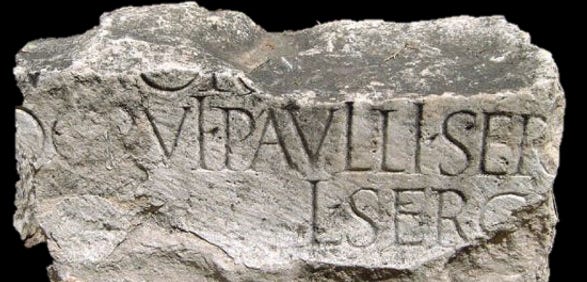
Now in Acts 13 the Antioch citizen assembly elects two of these social strategists to be emissaries of a strategic mission. [Aristotle’s description of ekklesias is in the extra section at the end of today’s post for paid subscribers.] Paul’s journeys always had a political or social component and to only think of these journeys as religious missions is incorrect. Paul, who for social strategic purposes changed his name from Saul, goes with Barnabas to Cyprus and intentionally seek to win over the first Gentile governor – Sergius Paulus[pic above is of stone with his name from first century]. It is noteworthy that a strategic priority (in addition to the Gospel) was to go into the political arena. This is normal activity for social strategists to do. It was not due to being arrested and brought before authorities – but was their own choice to go and try to influence the Roman Proconsul. They knew that you can’t fully transform a nation if you ignore the political sphere.
The second notable fact is that they had a public confrontation with a “…false Social strategist.” As stated in an earlier post, a prophet of God in Israel was known as a social strategist. False prophets were simply pagan social strategists trying to influence politics and culture. The goal and activity in the political arena was the same but the philosophy and worldview was different. Just as Elijah confronted Baal’s social strategists before the king and in the public square, so also Paul and Barnabas confronted Elymas before the Roman governor. Because of their willingness to be active in that sphere they successfully secured Sergius’s faith in Christ. But the goal was not just personal conversion, but social impact as well.
Resistance Against Government Abuse in Galatian Cities
Then in another city Paul gave a history lesson to the Jewish leaders saying that their “rulers” likewise had not heeded the voices of the Social Strategists…and said: “Beware therefore, lest what has been spoken in the Social Strategistscome upon you.”
A week later nearly the whole city gathered to listen but then when they were persecuted by “chief men (i.e. governors) of the city…Paul shook off the dust…against them.” This meant they made a public protest against the local government, as instructed by Jesus in Luke 10 (“…go out into its streets and say…‘we wipe off the dust…in protest against you’…” NASB). In Acts 14 it tells of activity in the next Galatian cities. And when “a violent attempt was made by…their rulers, to abuse and stone them, they…fled” [separation is another form of resistance to bad government instructed by Jesus in Matt 10:23]. Note that in both cases it was government leaders abusing their power that caused them to either protest or flee. If it was simply private individuals rejecting their message or persecuting them, they would just stay and keep preaching to others.
Paul preaches that although previously God “allowed all nations to walk in their own ways” that time is over. This was the idea behind the symbolism with the tongues events of Acts 2 and 10. The Babel “Nimrods” [Gen 11] of the nations would now be stopped by the new anti-tyranny messages from God’s people.But it would not be easy. It would be a battle and suffering would be part of it. Hence in another cityPaul was stoned and left for dead, but he explained it this way: …“We must through many tribulations enter the government of God.” This was not regarding entering eternity – Christ’s sacrifice was sufficient for salvation needing no works on our part – but overcoming trials and troubles is required for winning the battle for transformation of society on earth.
Raising up Senior Statesmen in New Cities
The main outcome of this first mission of Paul and Barnabas was “appointing elders (senior statesmen) in every citizen assembly.” This is the first mention of citizen assemblies in multiple Gentile cities. To appoint elders in them likely meant to to raise up Christians to be senior statesmen or leaders in the existing city assemblies, or it could suggest that they were starting alternative Christian citizen assemblies. To claim that they were just setting in pastors or religious leaders of religiously focused church groups to lead worship and Bible teaching is unwarranted by the text. We observed that they already had elders in Israel, and as in Israel, these elders were not priests or pastors with religious duties, but were cultural and civic leaders. This first strategic mission of Paul emphasizes the key results: new civic heads or senior statesmen (elders) of citizen assemblies (ekklesias).
After returning to Antioch, Paul reports on their mission at a gathering of its citizen assembly. Although not in the Acts narrative, apparently about this time two things occurred worthy of mention. According to Galatians chapter two Peter visited Antioch and is confronted by Saul for his refusal to eat with the Gentiles. And in the first four verses of Acts 15 it says that continuing disputes on law requirements for Gentiles led to the citizen assembly of Antioch sending Paul and Barnabas to meet the Jerusalem citizen assembly and its emissaries and senior statesmen.
James – the Presiding Leader of the Jerusalem Citizen Assembly
Before discussing what happens in the Jerusalem meeting it is important to know that James (brother of Jesus – not one of the 12 Apostles) emerged as the main presiding leader of the Jerusalem citizen assembly (Gal 1:19). He was identified as James “the Just” by later church fathers who wrote that James was the first to be “elected to the episcopal throne of the Jerusalem church.” James wrote a letter included in the New Testament canon that has no clear date but perhaps happened about this time. We will therefore discuss it now for the political principles and ideas that it contains.
James’ epistle is primarily for Jewish believers operating not in a religious church gathering but in a citizen assembly spread out among various nations. This is not a letter regarding religion, but from the citizen assembly chairman in Jerusalem regarding solving civic problems wherever they may be living. A huge difference in focus. Its message again is better understood by our method of continuing to paraphrase Bible words for context at that time.
Political Ideas in the Epistle of James
In his Epistle James emphasized the “law of liberty” (James 1:25; 2:12) which is a curious phrase. As mentioned in the previous post, Paul had previously met James (Gal 1:19) and his message on faith and “liberty” (Gal 2:4) was spreading. James seems to synthesize both law and liberty and this will have a major impact (discussed in our next post).
Key to understanding chapter two is that James puts his focus on conduct in the citizen assemblies (ch 2:2). In that context he condemned treating the rich and poor unequally, which at that time all pagan ekklesias did. The traditional ekklesias only allowed male citizens to speak or have a role in the assembly and favored the rich upper classes. James is calling for Christian reforms in those settings.
He uses the words “judges” and “judgement” in his letter and it is important to paraphrase this the way it meant in Israel. This was not relating to religious discernment in a religious gathering. A judge was not a religious leader but a civic governor. His judgement was not a religious opinion but a civic decision or public policy. With that in mind we see his argument unfold for Christ’s leaders in city ekklesias to behave different from typical citizen assemblies of that culture.
Treat All as Equals
James continues saying that partiality was an example of “governors [judges] with evil thoughts.” James then asks: “…Has God not elected the poor of this world to be rich in faith and heirs of the government [kingdom] which He promised to those who love Him? …Do not the rich oppress you and drag you into the courts?” James continues: If “You…love your neighbor as yourself,” you do well; but if you show partiality, you commit sin….So speak and so do as those who will be governed by the law of liberty ….Mercy triumphs over judgement [i.e. government policy decisions]…” It is notable that James quotes from Leviticus 19:18 on love of neighbor, because it is a passage regarding an Israeli citizen’s duties to help the poor, work for justice, and serve the community’s good (which Jesus also made a major part of His focus; Mk 12:31).
Avoid Government Over-reach
Later in chapter four James talks of how civic problems such as murder, coveting, fighting and war arise out of selfishness. He then argues for both citizens and governors to not be overly controlling of others. When you try to regulate the decisions and actions of other citizens you really are corrupting the simple protective purpose of law and governance. James argues: “…He who speaks evil of a brother and governs [judges] his brother, speaks evil of the law and governs the law. But… There is one Lawgiver…Who are you to govern another?” In other words, you are making government itself above the law instead of serving the law.
God’s idea of good governance (in contrast to pagan centralization and control of everything) is to keep government small and limited and let people have freedom. This was the basic idea of the tenth commandment (i.e. commandments 5-9 say government must protect parental rights, life, property, marriage and justice but then #10 says for governors to avoid regulating everything else. Explained in earlier post here).
Although the rich were previously implicated above in the civic problems, James again in chapter five warns of abuse by business leaders. “ …Your riches are corrupted….the wages of the laborers…which you kept back by fraud, cry out…” And James identifies more problems with governors: “…you have murdered the just;….the Governor [Judge] is standing at the door!” In other words, corruption in marketplace and in the civic sphere was potentially coming to a head.
Have Patience like the Historic Social Strategists
The reference to God standing at the door did not likely refer to the second coming of Christ, but rather God’s correction of corruption through the raising up of His social strategists and senior statesmen in society. (Paul would later call them God’s avengers who bring terror to evildoers through civil punishments – Rom 13:3,4).
The reason for this view is what James says next. He argues that although the world is sometimes frustrating and unjust, they should look at the historic “…Social strategists [prophets]…as an example of suffering and patience…” We can’t say discipling nations and justice is impossible and just quit trying. The prophets kept at it despite arrests and prison and sometimes executions of their leaders. When Paul was bleeding from stoning and left for dead, they gathered and prayed over him to recover. So also here James says if some are suffering or sick (which seems in the context to be due to the trials they face in an unjust tyrannical society), that they can call on the “the senior statesmen of the citizen council, and let them pray over him…endorsing him with oil…”
This is primarily talking about a religious church meeting for healing. Rather, it is exactly what prophets in the ancient Israel would do in times of crisis and tyranny – they would anoint a political activist (as when Samuel anointed David) to signify to the voters in Israel who they should support as their leader resisting tyranny in the political sphere. In effect, James is saying we need to raise up more godly leaders in political activism and government who will oppose evil and lead the right way. For James in the volatile Jerusalem setting, his advice for citizen assemblies is from real experience. This is how they had survived under severe persecution.
Having pondered the political thought of James we will see how God uses him in the upcoming Jerusalem meeting in our next post.
[For paid subscribers we offer some interesting information about the Greek ekklesias or citizen assemblies directly from the words of Aristotle in the 4th century BC.]
TransformNation Substack is a reader-supported publication. To receive new posts and support my work, consider becoming a free or paid subscriber.
The content below was originally paywalled.
ARISTOTLE ON ECCLESIA OR POPULAR ASSEMBLY (c350BC)
In his book The Assembly, Christopher W. Blackwell writes:
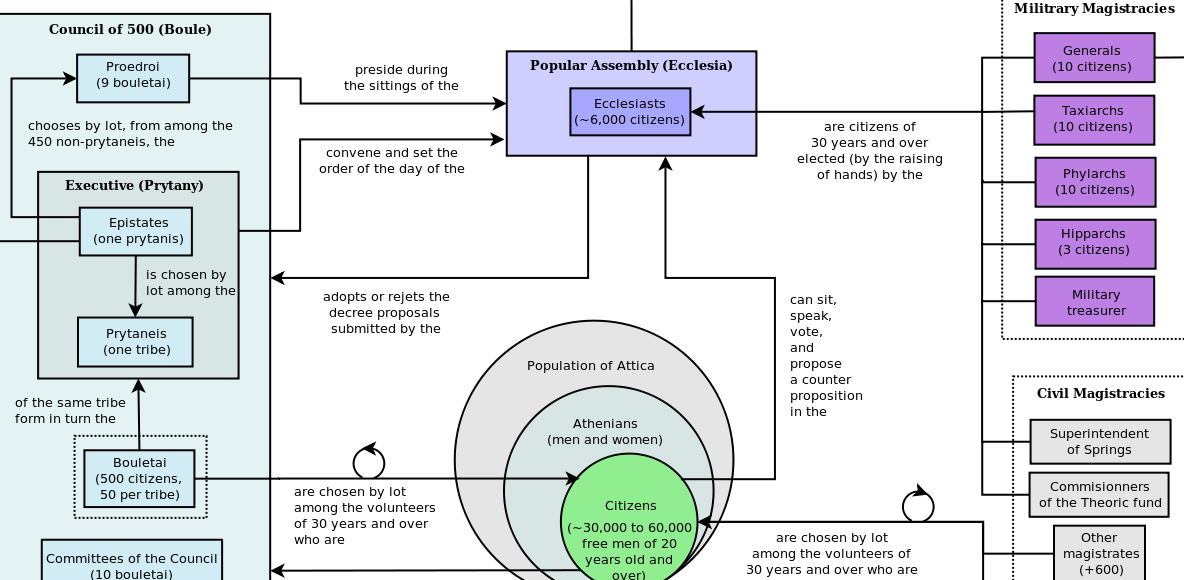
The Assembly (ecclesia ἐκκλησία) was the regular opportunity for all male citizens of Athens to speak their minds and exercise their votes regarding the government of their city. Under this government, he says, the People administers all business “by decrees and by law-courts.” When Aristotle mentions the People and government by decrees, he is describing the Assembly. In the Assembly each male citizen of Athens could speak, regardless of his station….
The following is from Aristotle himself written over 400 years before Jesus said “I will build My Ecclesia”. [Aristotle in 23 Volumes, Vol. 20, translated by H. Rackham. Cambridge, MA, Harvard University Press; London, William Heinemann Ltd. 1952]:
….Ephialtes…put down the Areopagite Council, during which it came about because of the demagogues that the state made many mistakes, because of the empire of the sea.…[Later] the constitution [was] established…[and] has continued down to its present form, constantly taking on additions to the power of the multitude.
For the people [i.e. Ecclesia] has made itself master of everything, and administers everything by decrees and by jury courts in which the people is the ruling power, for even the cases tried by the Council have come to the people. And they seem to act rightly in doing this, for a few are more easily corrupted by gain and by influence than the many….
All the officials [of the Ecclesia] concerned with the regular administration are appointed by lot, except a Treasurer of Military Funds, the Controllers of the Spectacle Fund, and the Superintendent of Wells; these officers are elected by show of hands, and their term of office runs [every 4 years]. All military officers also are elected by show of hands.
The Council [i.e. a smaller group out of the whole Ecclesia] is elected [by] lot, and has five hundred members, fifty from each tribe. The Presidency is filled by each tribe in turn, in an order settled by lot, each of the first four selected holding the office for thirty-six days and each of the latter six for thirty-five days; for their year is divided into lunar months.
Those of them serving as Presidents first dine together in the Round-house, receiving a sum of money from the state, and then convene meetings of the Council and the People, the Council indeed meeting on every day excepting holidays, but the People four times in each presidency. And the Presidents put up written notice of the business to be dealt with by the Council, and of each day’s agenda, and of the place of meeting.
They also put up written notice of the meetings of the Assembly: one sovereign meeting, at which the business is to vote the confirmation of the magistrates in office if they are thought to govern well, and to deal with matters of food supply and the defence of the country; and on this day informations have to be laid by those who wish, and the inventories of estates being confiscated read, and the lists of suits about inheritance and heiresses, so that all may have cognizance of any vacancy in an estate that occurs.
….in addition to the business specified they take a vote on the desirability of holding an ostracism, and on preliminary informations against persons charged as malicious informers, citizens and resident aliens, up to the number of not more than three cases of either class, and charges of failure to perform a service promised to the People.
Another meeting is given to petitions, at which anyone who wishes, after placing a suppliant-branch, may speak to the People about any matter he may wish whether public or private. The two other meetings deal with all other business, at which the laws enact that three cases of sacred matters are to be dealt with, three audiences for heralds and embassies, and three cases of secular matters. And sometimes they do business without a preliminary vote being taken. Also the Presidents give a first audience to heralds and to ambassadors, and to the Presidents dispatches are delivered by their bearers….
And whenever the Presidents call a meeting of the Council or of the People, this official selects by lot nine Chairmen, one from each tribe except the tribe presiding, and again from these a single Head, and he hands over the list of agenda to them; and after receiving it they superintend procedure, bring forward the business to be dealt with, act as tellers, direct all the other business and have power to dismiss the meeting. A man cannot become Head more than once a year, but he can be Chairman once in each presidency….
.…the People deprived the Council of the power to sentence to death and imprisonment and to impose fines, and made a law that all verdicts of guilty and penalties passed by the Council must be brought before the jury-court by the Legislators, and that any vote of the jurymen should be sovereign….
In these matters therefore the Council is not sovereign, but it prepares resolutions for the People, and the People cannot pass any measures that have not been prepared by the Council and published in writing in advance by the Presidents…