Limited-purpose Banking
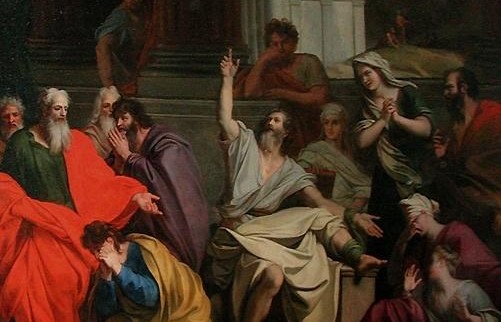
The globalist elites that meet at Davos or develop their 2030 agendas are responsible for many of the economic problems in the nations today. While some of their ideas in their great “reset” sound good on the surface, their methods are often contrary to Biblical principles and therefore are doomed to create worse problems. When the Creator’s design is ignored, there is impending failure and suffering ahead. There is some evidence that many of the crises today are intentional so that the globalist agenda may be implemented more quickly and easily.
One of the worst problems today is in the banking world.
When Christians invented the idea of banking beginning in medieval Italy, it enabled the continent of Europe to quickly rise to economic prosperity that the rest of the world is still trying to catch up to. Their principles and patterns of banking were based on God’s design, on a Biblical worldview.
Unfortunately, in the last couple centuries Christians gradually abandoned leadership in the banking world and slowly new structures and new philosophies corrupted the system. Requirements for equity and diversity today are part of it, based on pagan sexual immorality instead of true virtue. But one of the most significant corruptions is the promotion of debt as the very basis of banking.
The Curse of Debt
The Bible condemns debt as a basis of economic activity. It declares that the ideal is to be the lender and not the borrower, and that debasing of currency is immoral.
The modern banking system actually “creates” money out of nothing by issuing loans. When loans are paid off, the money is “destroyed.” The entire motivation of this system is to keep increasing debt.
But there is a looming money crash ahead. It is an unsustainable system that will end one way or the other.
I had the privilege recently to spend time with one of the top global economists named Uli Kortsch. I consider him to be a modern Agabus, a prophet (see pic above) that the church must listen to. In the New Testament, prophets were first mentioned among church leadership in the Antioch church (Acts 13). The best way to understand prophets is not as religious leaders, but rather as social strategists. That’s the way they were viewed in ancient Israel’s history.
When the prophet Agabus appears in the book of Acts, it says his concern was about a coming famine that would bring much hardship (Acts 11:27,28). The Apostles and church leadership took his insights seriously and developed a pro-active plan (vs 29,30) to be ready to mobilize resources and activities to step and help in the difficult social situation that would take place. It helped the church to be relevant in society with real solutions for transformation of the nations.
Uli Kortsch is a modern Agabus. He is a Christian who happens to be one of the most influential global economists. He does not speak as many modern prophets who reside in the religious world and proclaim messages about world affairs without any real expertise in public affairs. Uli is the opposite. He is in the economic banking world. He has convened conferences at the Federal Reserve and in the economic centers such as Switzerland. At these events that Kortsch organizes, the highest regarded bankers and economists in the world attend (somehow I was able to get into one of them!). He knows what he is talking about and is highly respected.
The Coming Crisis
Having said that, it is important to see Kortsch as a modern Agabus. He sees another coming crisis, not primarily in food (although it will affect that area as well), but in money. His book is “The Next Money Crash and a Reconstruction Blueprint.” You can get it at his website www.ulikortsch.com. He predicts major suffering from this coming crash, but if the church listens to him and starts to prepare solutions now, we can be positioned to provide leadership to the nations of the world.
Kortsch’s book is highly technical but basically proposes a solution: We need to start limited-purpose banks (100% reserved but mutualized). He also says (but not in the book) that we need to create networks of international equity-based funding alternatives to the globalist agenda. It is a workable plan that can shift the entire global banking system someday to an equity-based (which happens to be a Biblical) monetary model instead of a debt-based model. He doesn’t speak about it with religious terminology but with language the world’s elite can understand. The problem is the lack of courage to change and the many vested interests against it.
We must take the initiative
Uli Kortsch concludes his book saying that it:
“….lays out an action plan with some room for improvisation. Will we have the courage to act? Kicking the proverbial can down the road feels easy in the moment but can lead to devastating consequences. The point of a system redesign is to acknowledge we have a broken monetary system, that has drifted far away from serving “We the People.” There is a growing recognition, even within the Federal Reserve, that something is wrong. The needed actions described here on money and banking can restore a better balance for all. With knowledge there is true power. The US monetary system defines money as debt and relies on private banks to issue the money through their lending activities. The Federal Reserve acts as a lender of last resort to the banks and regulates them. The flaw in this arrangement is the banks define what people use for money and the government has ceded actual monetary control to them. The US Constitution appoints the government to have the role of money issuance. By delegating control, the financial system is loaded with unnecessary debt and enormous inequality.”
But Kortsch confidently declares that “The Federal Reserve can be reformed and retained through a transition.” He says that “money can and must originate with the government without interest costs. …A publicly driven money system will help by buttressing bank balance sheets so they cannot hold the government and economy hostage in a crisis by incurring losses that take the system down.”
Agabus is speaking today. Like the early church Apostles, let’s act now to prepare for what’s coming.
More details on Uli’s proposal are in the subscriber section below.
The content below was originally paywalled.
[Note: Below is but one small part of Uli’s book. Get a copy to really understand it fully.]
The conversion process—in one big step or in many small steps
There are multiple parts to this general plan—some of which are interdependent and must be linked, and others which may or may not be chosen. The conversion scenarios therefore depend on which parts are chosen. The Chicago Plan/Sovereign Money must be linked with either LPB (Limited Purpose Banking) or SS (Systemic Solvency) as they will not work without it. LPB can be seamlessly incorporated into SS, but LPB does not automatically incorporate SS. Here is a quick overview.
In one step: The banking structure conversion under either LPB or SS is the most complex. Very simply, the 90%+ of banking assets (loans, treasuries, etc.) not covered by reserves need to become totally covered. There are a number of different ways in which this can be done, but one of the simplest would be for Treasury (or the national central bank in some countries) to create the amount of money needed in order to have a conversion process whereby the current assets of each bank that are not covered by deposits are moved into a temporary holding unit. The creation of the needed funds for this would not be inflationary, as the value of all the relevant assets are already in circulation. This would simply be a balance sheet transfer. Over a period of time, say 60 days, all the assets in the holding unit would be sold into the mutual funds formed by the banks under the new banking structure. The banks would then have a “100% reserve” versus the current fractional reserve system. The next step would be to cancel the whole concept of reserves as currently defined and simply have the national central bank become an interbank clearing house (plus other economic functions such as research, etc.). This would then have the banking system be a single-circuit system as per Chapter 8 (and briefly discussed in Chapter 1). Once the planning is in place the process just described can be done over a weekend. The method of converting the banking system from the current debt-based lending system into an LPB structure is handled in depth in Chapter 14.
In many steps: If the conversion is to be more incremental, then a voluntary process can be implemented available to all banks, but not mandatory. Pass legislation establishing a new type of “bank” operating under an LPB structure. This would create stability in this type of depository institution as no liquidity runs would be possible. They could be called National Credit Institutes, as this would minimize possible legal implications from the Basel Accord and make clear to all depositors that their money is now totally safe, even if the “bank” were to go bankrupt. This safety would draw large depositors because there would be no insurance limit as is currently the case, and there would be no negative interest rates.
Allow all banks of whatever size to convert voluntarily to this structure, in return for which
• all current banking regulations would be removed, including the banking portions of the Dodd-Frank act;
• banks would be regulated under the SEC as are today’s mutual funds;
• banks would not be subject to FDIC fees;
• banks would continue to have all needed privileges with the Fed, such as check clearing, but excluding the discount window or any type of credit facility.
To convert to the 100% reserve position from the current fractional reserve system the banks would sell their investment portfolio for Sovereign Money issued (for the ~90%+ cash missing). These assets would be sold off later by Treasury for a large net gain decreasing federal debt. This would be incremental as both types of banks could operate simultaneously. The decrease in money creation possibility through this partial banking conversion would be offset by a smaller (relative to total system conversion) deployment of regular Sovereign Money as described earlier in this chapter.
Conversion to the Sovereign Solvency system is much simpler, excluding the banking part as just described.
“Most non-financial companies are already today compliant with the systemic solvency rule. Those who are not yet compliant will have to either raise new equity or sell financial assets. But the required adaptions are gradual; no business model in the non-financial sector would be threatened by a systemic solvency rule.” (Chapter 10)
Financial firms which are not official banks would also need to either increase equity or sell some financial assets. They would be given a set time to do that.
The movement into an equity-based economy versus our current debt-at-interest economy would need legislation at minimum to stop interest being tax deductible (see Chapter 5), then allowing greater flexibility for assets of all types, especially private real estate, to be owned on an equity-shared basis.