The Purpose of the Second and Third Commandments
The previous article explained that the First Commandment was not about religious requirements of citizens, but making the worldview and morals of Jehovah the primary source of law for the state. Although it may seem that the next two commands also relate to worship, they do not. They prohibit the state from using sex, religion and the marketplace. And as stated previously, they apply to the governing elders primarily (to whom they are addressed) and to citizens only secondarily.
The Second and Third Commandments (i.e. principles for good governance) are from Exodus 20:4,7. They are below:
Exod 20:4— “You [governing elders] shall not make for yourself a carved image; ….nor serve them”
Exod 20:7— “You [governing elders] shall not take the name of the Lord your God in vain”
In effect they mean the following. Your government shall not mix religious or sexual activity for political purposes. And Your government shall not corrupt nor control social or economic contracts or marketplace activity.
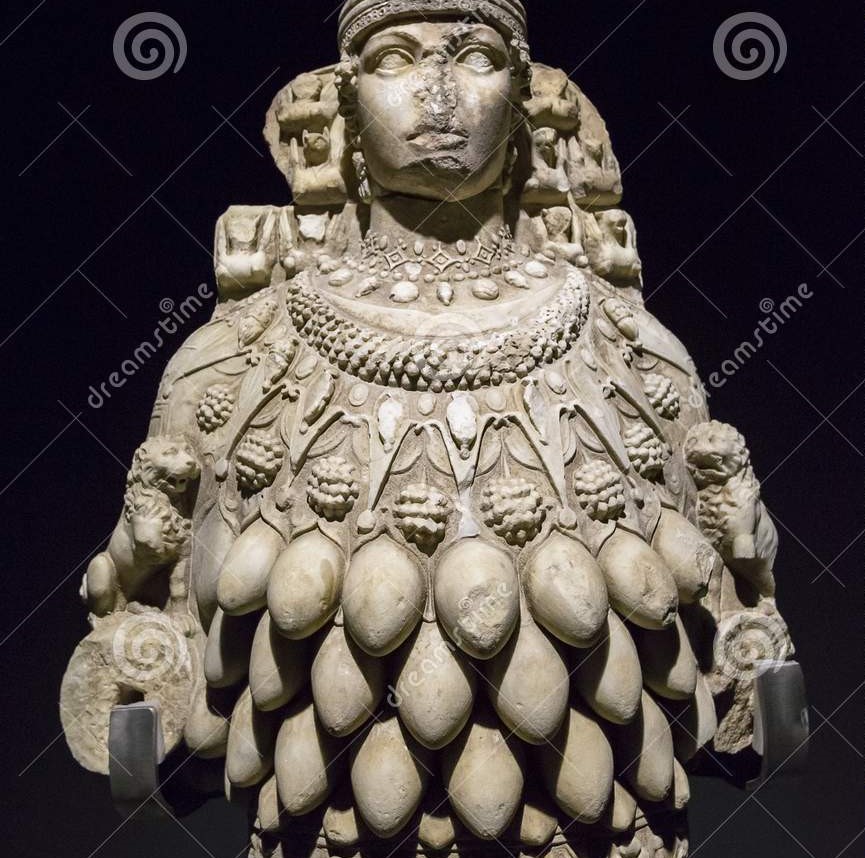
It is all about context. A ban on graven images had nothing to do with portraying God in art. This is not directly a media issue. In the ancient world, pagan governments used artistic religious images connected to pagan religions and fertility cults to gain power and influence over their citizens. Many pagan religions had idols or graven images that were focused on sexuality. The images used human genitalia and often exaggerated their size or number. For example, the great goddess of the Ephesians was Diana whose image was of a woman with many breasts (note image above). This and similar pagan idols were basically pornographic in nature and their religions also included temples with prostitutes that blessed sexual immorality in the name of their religion.
The content below was originally paywalled.
Pagan governments supported such activity so as to get the support of their constituents who, being sinners, welcomed such favor on their immoral actions. The use of both sex and religion by government to gain power over people was very effective (as is the use of money, discussed later).
What the Second Commandment did was to say that Israel’s government would not be permitted to use sex and religion for political reasons. It was required to maintain separation of religion and state and also sex and state. These were to be private matters, not state-manipulated matters. It should also be noted that in Israel this commandment basically banned public sexual activity and thus maintained public morality. Children were especially protected from seeing sexual acts in public. This is a legitimate state concern.
Church and State was often combined by governments in history and even Christianity for many centuries fell into this mistake, thinking it was okay since it was the “right” religion. But eventually nations such as the United States led the way in separating church and state. Even if well-intended, it is not the state’s role to promote one church. Sexual activity was not really a modern concern needing to be referenced in its First Amendment. However, today governments find new ways to use sexual immorality to gain support from constituents. For example, to remove all penalties for heterosexual activity and to promote other sexual pursuits be they gay, transgender, etc, has real political power in the modern world (not so different from the pagan pre-Christian world). And instead of shielding children from sex and genitalia in public, the modern state uses its public schools now intentionally exposes children to such things!
In ancient times there were powerful economic interests in such things. The “silversmiths of Ephesus” that initiated the protests in protection of Diana of Ephesus, are similar to those who are enriched by the government’s lack of control of sexual immorality today. Hollywood interests, online pornographic interests work hard for their first Amendment freedoms, but as Robert Ingram in The World Under God’s Law says, “Freedom of the press… was never intended to provide a vehicle for the untrammeled practice of vice.”
The Third Commandment is also a ban on government activity in another sphere of society. Just as the 2rd Commandment says Israel’s elders should not use religion and sex for political purposes, so also the 3rd Commandment says the government should not use the marketplace or money for political purposes.
Not taking God’s name in vain has nothing to do with cursing or swearing. Rob Schenck, in The Ten Words That Will Change a Nation – The Ten Commandments, says: “These transgressions, notwithstanding their gravity, pale into misdemeanors when compared to the first-class felony of misappropriating God’s name.”
In the ancient world, all contracts in the marketplace were made legal by use of invoking the name of a god. But corruption was rampant simply because there was a common understanding that such use of these names meant nothing in practice. But not in Israel where oaths were considered truly binding when done in the name of Jehovah. And if someone did so without sufficient follow-through, it was considered “taking His name in vain” (or as another translation says: “swearing falsely”). Jesus emphasized the seriousness of taking oaths (Mt 5:33-37) and the importance of integrity with either yea or nay.
Pagan governments often never punished such false oaths, and the marketplace had no real integrity. Contracts were rife with corruption and economic activity was consequently depressed. Of course, pagan governments would become the important ally to intervene and force contracts to be honored issue for a bribe to the official.
Especially egregious misuse of God’s name would be done by pagan tyrants who did illegal and harmful acts while invoking the name of a deity for approval. Some nations even today say they can arrest and kill some citizens because their religion says such citizens are “infidels” deserving no rights and protection as others have. [Of course citizens also may not invoke the name of their god to justify murder of other innocent people. You cannot say God told you do something that violates His law.]
But Israel’s government was bound seriously to not use God’s name to do criminal activity or violate citizen’s rights. The most important of all oaths was that of government officers themselves, to abide by Constitutional law. It should mean something when men or women are sworn into office, saying “So help me God.” In pagan governments it does not. Ingram says that the Third Commandment is “the foundation for all legal procedure” and primarily “…a prohibition against perjury…”
Israel’s government was to uphold oaths and punish oath-breakers and thus to maintain a truly honest marketplace, but also its governors and judges were not allowed to operate using bribes and corruption. The Third Commandment was like the U.S. Constitution’s Contract Clause in Article I: “no state shall pass any Law impairing the Obligation of Contracts.” Robert Shinkoskey in Democracy and the Ten Commandments says that this commandment in Israel “protected commerce and property against exploitation or over-regulation by government.” This released great prosperity in the economy.
Many modern governments today foster a system of economic corruption and the citizens groan under such oppression. The Third Commandment made Israel’s government different from most other nations. It was to keep out of manipulating the marketplace by allowing corruption, even as the Second Commandment required the state to stay out of the sphere of religion and sex.