A Parable of Christ’s love to liberate people from darkness
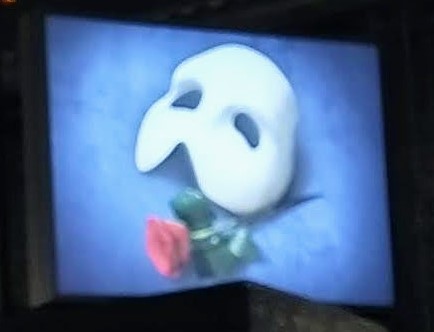
Recently my wife and I had the privilege to go to New York for our wedding anniversary and saw the Phantom of the Opera. We wanted to see it before it soon leaves Broadway after over 35 years. Besides the excellence of the show in itself, I discerned a powerful spiritual parable (even if you cannot see it live, it is available now as a movie).
I will try to explain through the lyrics of each song in the paid subscriber section below, recognizing that the writer of the lyrics was not intending to communicate the message that I discovered (and thus some incongruities are there). The parable, as I see it, is about two unbelievers and the power of Christ’s love to overcome darkness.
Everything in art does not have to have spiritual meaning to have worth, but the best art is that which resonates with reality. With real life situations that we face as humans in a fallen world. The Bible itself gives many stories that are real, sometimes in graphic detail that may require some careful explanation for children. Some of those stories do not mention God at all. Such is the story of Esther. God is nowhere to be found in the entire book. But it is inspired by God, nonetheless.
Also in the Bible are parables. Fictitious stories that have real human and spiritual value. Jesus used parables often to teach.
There are many great modern movies made by Christians today that are overtly spiritual and meaningful. But there are often works of art Christians make that are more indirect. Sometimes unbelievers produce art, music, film, drama, literature, poetry and other media that speaks truth, even if not religious. There is a common grace from God that allows humans to use their talents for strengthening beauty and morality in society. Of course the same talents can also bring corruption.
When Jesus said to go and make disciples of all nations in the Great Commission (Mt 28), He also spoke of national signs that would follow. In Mark 16 He said that we should see the nations who believe to “speak with new tongues.” The disciples who heard Jesus speak of this, would almost certainly connected the idea with the story in their Hebrew scriptures of the story of Babel. In Genesis 11 a message was spread among the people that sounded good, but really was dangerous to the people. Their leader Nimrod used seductive messages to manipulate the people and centralize power so that the Bible identifies him as the first to establish a “kingdom” on earth (Gen 10:10). This corruption of government was due to one language through which his messages spread. So God stops his scheme by making them speak new tongues, new languages that effectively decentralized everything into smaller language groups and cultures.
Jesus was telling us that we all have “Nimrods” in our nations today that have messages that sound innocent to most people but are corrupting culture and harming humans beings. If we do our job, we will help citizens in our societies to speak in new ways – to speak messages and ideas, rooted in God’s word, that overcome those bad messages.
In other words, we must transform the thinking and messaging of culture in order to disciple our nation. This is done by getting a Biblical worldview to the next generation through schools, and to the current professional leaders through adult educational institutions, and to all people in society through art, media and mass communication. To do this well, we have to translate Bible ideas into non-religious language.
Now, back to my observation on the message of the Phantom of the Opera. You may not agree with my interpretation of the lyrics, but if interested, please subscribe to see what I think is profound message of how the church is called to love the world and to liberate them from darkness.
The content below was originally paywalled.
Lyrics from Phantom of the Opera
The parable I submit for your consideration is about two unbelievers and the power of Christ’s love to overcome darkness. I will explain this in the songs below.
Think of Me, sung by an understudy performer named Christine
This song shows that Christine’s real love is her childhood friend Raoul whom she had fallen out of contact with after her father died and she was put in the opera boarding school. The song also shows that Raoul loved her and indeed remembered her. Christine is symbolic of an unbeliever who has some superficial knowledge of Christ, who Raoul symbolizes.
Angel of Music, sung by Christine and the Phantom
The phantom of the opera is a person who was born with a birth defect that made his face so hideous it resulted in great rejection (being on display as a freak in a circus). He killed his circus master and escaped to the caverns under the opera house where he grew up listening to the music and learning to write great music himself. The Phantom is also symbolic of an unbeliever in the world who is influenced and controlled by demonic spirits. All human beings are born with an ugly sin nature but each one adds to the ugliness with their own acts that distort their soul.
The Phantom noticed Christine when she was young and pretended to be an angel of music sent from heaven by her deceased father and he speaks to Christine from behind a mirror and in the shadows using her father’s identity. Her desire to communicate with her father made her willing to open her soul and mind to be trained by this angel of music how to sing very well, and it resulted in her suddenly becoming the star in the opera house. The devil often tricks us and uses people in this world to lead us toward darkness. Christine’s friend Meg tries to warn her of bad influences.
Little Lotte/The Mirror, sung by Christine and the Phantom
Raoul and Christine meet again after many years and reminisce on their childhood relationship. It becomes apparent why she so readily opened her soul to the control of the Phantom because her father had told her an angel would come to her. The Phantom even influenced her when she was most vulnerable in her sleep; singing songs in her head. Raoul (representing Christ) tells her she must change and leaves her to prepare arrangements for them to be together, so the Phantom (an unbeliever energized by evil), who has been listening to their conversation from behind the mirror, manipulates Christine by saying that Raoul doesn’t really care about her – that he only is interested in her because of her singing ability that made her a star. In fact, the Phantom is the one who cares for her only because of her singing and sees her accomplishments as his triumph. Christine apologizes to the Phantom and asks to see him. Interestingly she calls him a strict “master” which describes her perspective of the relationship – i.e. not a romantic one. She asks for the Phantom to “enter at last, Master; come to me strange angel” and he replies “you shall know me; come to me, angel of music.”
Phantom of the Opera, sung by Christine and the Phantom
The Phantom finally reveals himself to her and she begins to realize that he is not an angel, but actually a man hiding his face [i.e. sin] with a mask. She is enthralled with him nonetheless and entranced by him, even inside her mind, because of his unseen influence over her for many years during the nighttime. The Phantom boldly declares his power over her was still growing. Interestingly, Christine realizes that the Phantom uses her like his mask in public when she sings his music.
They both acknowledge that her voice and spirit were one with his when she sang (just as evil manifests through actions of sinners). She begins to sing as he boldly commands (his angel) Christine to sing for him. The Phantom says that his cavern was the seat of music’s throne and that all must pay homage to his music. His motive of control instead of real love is revealed. He explains that from the beginning he has “needed” her to be with him to “serve” him and to sing for his music. It also shows that really he himself is also being used by a higher power over him – music – which is symbolic of demonic power over the unbeliever. All sinners are prone to be controlled more and more by the devil described by Christine as “inside my mind.” Phantom says she must “serve me to sing for my music.”
Music of the Night (all sung by the Phantom)
The fullness of the demonic power at work through the music is revealed in this song. The music that the Phantom writes is called “the darkness of the music of the night” and is declared to have ability to deceive and to caress and to secretly possess her if she will only close her eyes to the truth, and let her darker side give in to the music’s power. The imagery and language is all associated with spiritual darkness and demonic power and yet is done in such a way that it seems beautiful and wonderful. Like many sinners in the world, the Phantom, knowing nothing better, revels in the power and comfort that the dark music brings to him and tries to get others to affirm that and join in it with him. Now that Christine knows that the Phantom is not really an angel from her father, The Phantom seductively appeals to Christine to help him make his “song take flight” by her voluntary choice now to help him “make the music of the night.” Sin is a pleasurable thing that can get power over people through voluntary choices and lack of resistance. This was such a moment. The devil uses the music of the night to “caress you…secretly possess you…you cannot fight.” The Phantom, like Satan, urges her to “let your darker side give in to the power of the music of the night” because he says it will “set you free…[when] you belong to Me.” The Phantom tells her he needs her to “make my song take flight…(so he asks her to) help me make the music of the night. Indeed, the devil has no real power on earth unless humans give it to him.
I Remember, sung by Christine and the Phantom
Christine had a fainting spell but then awakes and walks around the Phantom’s cavern and recalls her beautifully seductive experience with the Phantom. He is vulnerable and near her at the moment, so she reaches out and pulls the mask off the Phantom and sees his ugly face. He then curses her and calls her a demon and tells her that now she will never be free. Condemnation is what the devil tells people when they sin. The Phantom also reveals that he is really in bondage himself saying he “burns in hell, but seccretly yearns for heaven and yearns for her to see beauty in him and to see him as a man (i.e. good), rather than a beast or monster (i.e. a sinner). After Christine returns to the opera house, and the Phantom kills a person and makes other threats, she realizes her own danger. She meets up with Raoul on the rooftop.
All I Ask of You, sung by Christine and Raoul
This song is the turning point for Christine. She cries out for freedom and escape from death and real love, and hears Raoul’s (i.e Christ’s) invitation for her to come out of darkness into the light and expresses his selfless love. Raoul tells her to say, i.e. confess, what we she wants. After each promising to share their love and lives together, they kiss (with a crescendo of music). The Biblical Greek word for worship means to kiss. Through the kiss or embrace of God the believer is set free from bondage, so also Christine is freed from the control of the Phantom and darkness by Raoul’s kiss. Christine choice to trust and go with Raoul represents a conversion and salvation experience with Christ.
All I Ask of You (reprise with last part sung by Phantom)
When Christine commits her love to Raoul (i.e. when a person is converted), the Phantom reacts with the threat of a curse for no longer doing his bidding. So also, the kingdom of darkness will try to attack the new believer. The Phantom uses their song henceforth to try to seduce her back to him.
Masquerade, sung by chorus and parts by everyone
Raoul and Christine are engaged but not openly, and after a while there is a party and a crowd sings a song in which they acknowledge that they use a mask to survive in the “inhuman race” of life in the world. They represent unbelievers who may “run and hide….(but) a face will still pursue you.” In other words, they never have true peace even while trying to look happy. The song also reveals that Christine, like a baby believer, is fearful of the world, especially her former partner in evil (the Phantom), of finding out and causing persecution and attack. The Phantom appears with new music and says at the end that he seeks Christine to return to him, since he still has her “chains” and therefore she still belongs to him. Although not true, it is symbolic of the world’s ability to influence young believers.
Wishing You Were Somehow Here Again (all sung by Christine)
In this song Christine unwisely goes to the cemetery to visit her father’s grave, a place where the Phantom had apparently often secretly gained control over her mind by acting like her father’s voice or an angel with whom she could talk. She puts herself in a vulnerable situation, but thankfully Raoul, representing Christ, comes and rescues her from the Phantom’s trap.
Past the Point of No Return, sung by Christine and the Phantom
In this song the Phantom uses his dark music to seduce Christine again. She begins to fall for it, “past all thought of right or wrong” because of her lust and fantasies that she allowed to work in her mind. There is a reality to temptation and sin, even after the believer has been betrothed to Christ. Someone who is truly saved is genuinely “past the point of no return” to the world. A true saint is secure in Christ, but the believer must discover that the world with its hidden ugliness of sin is an inferior pleasure and love compared to the transcendent and pure holy romance of the beautiful bridegroom Jesus. The struggle is very real to the believer.
In trying to get Christine back to him, the Phantom borrows from the song Christian and Raoul expressed to each other on the rooftop. In it, he says her love would “save” him from his “solitude.” Here is a hint of the culmination of the parable. But the Phantom makes a mistake in using that sone for when she hears the song of her true lover – Raoul, representing Jesus – it prompts her to again remove the Phantom’s mask before everyone. He goes into a rage and forcefully takes her back to his caverns beneath the opera house.
Down Once More, sung by chorus and parts by everyone
In his dark abode the Phantom makes her put on the wedding clothes that he had been keeping on the manakin of her image there. She tells him that she now sees his lust and that her illusions were shattered and that he was now a fallen idol in her eyes. She tells him that he was a false friend who had deceived her and that she blindly gave him her mind. She also tells him that the real distortion is not in his face, but in his soul. The hideous face is symbolic of the distorted soul. This is where the real lyrics and the parable I see are more aligned than ever.
At this point Raoul, representing Christ, shows up to rescue Christine and he is captured by the Phantom and his arms tied up spread out in a manner resembling the cross. He calls to her from that cross. [Note: in the show, Raoul may appear helpless here and subject the power of the Phantom, which would not be a Biblical concept for Christ. But the focus of the parable here is on the role of Christine, representing the bride of Christ, empowered by Christ to do what needs to be done.] Christine, representing the believer, is awakened by Christ’s loving words and spiritual romance to in turn respond as Christ calls us to do. She realizes that she must not hold hatred toward the Phantom but rather to have pity and to have courage to give him the same kind of selfless love that Raoul gave her which liberated her. Christine actually asks God to give her the courage to love the Phantom. She sings: “Pitiful creature of darkness, What kind of life have you known? God give me courage to show you, You are not alone.” The second kiss takes place with a crescendo of the music.
As she kisses the Phantom in pure Christ-like love, he is set free and the power of the music of the night over him is broken. He says this as he sings the tune of the former masquerade song chooses to leave his mask and the music box, and destroys the mirror that he had to once hide behind. He loudly proclaims in the last stanza of his old song with the change in words that says: “It’s over now, the music of the night!” Because of Christine’s act of love, she made it “take flight” (i.e. go away). And because of this expression of Christ’s love through her, he now is able to sing for the first time of his pure love for Christine for her role in loving him into freedom. He loves because she first loved him, and he permits Christine and Raoul to go free. And he likewise lives in freedom with no need of a mask and mirror for the rest of his life (proven by the rose left on Christine’s grave many years later).
All of this is the culminating message of the parable. When a person like Christine is saved by Christ, the temptation is to separate from the world, but in reality, Christ wants to use us to reach others in bondage. The “kiss” of Christ sets us free and likewise when we in turn “kiss” others with His selfless pure love, it sets them free. Unbelievers feel shame and separation from God due to the ugliness of their sin and they long for someone to truly love them despite their hideous face – i.e. their distorted soul. They yearn for someone to reach out and save them. Christ is the Saviour, but He wants to use the Church in His work. It is sometimes hard to do, but we all who have been saved by Christ, must let Him use us to reach the “Phantoms of the Opera” that are all around us. [Now go watch the movie or see the show!]